India’s Silicon Valley, Bengaluru, one of the country’s most progressive and developed cities, has drawn attention for a 28-fold increase in calls to its mental health helpline over the past three years. Reports from NIMHANS have raised eyebrows about the city’s commercial growth and emotional deficit.
In response to rising issues, the National Institute of Mental Health and Neurosciences, the National Centre for Biological Sciences, and Rohini Nilekani Philanthropies have collaborated to create Manotsava, a first-of-its-kind National Mental Health Festival designed to spark dialogue, build community, and make mental health research accessible to all.
Now in its second year, the Manotsava National Mental Health Festival brought together researchers, citizens, and business leaders to break the silence around an issue that affects one in every seven Indians. After a successful first edition, the second was especially significant because industrialists came forward to discuss mental health and its impact on people at every level of society, assuring that untouchability is a myth when it comes to mental health.
Venturing out of boardrooms, looking for PEACE
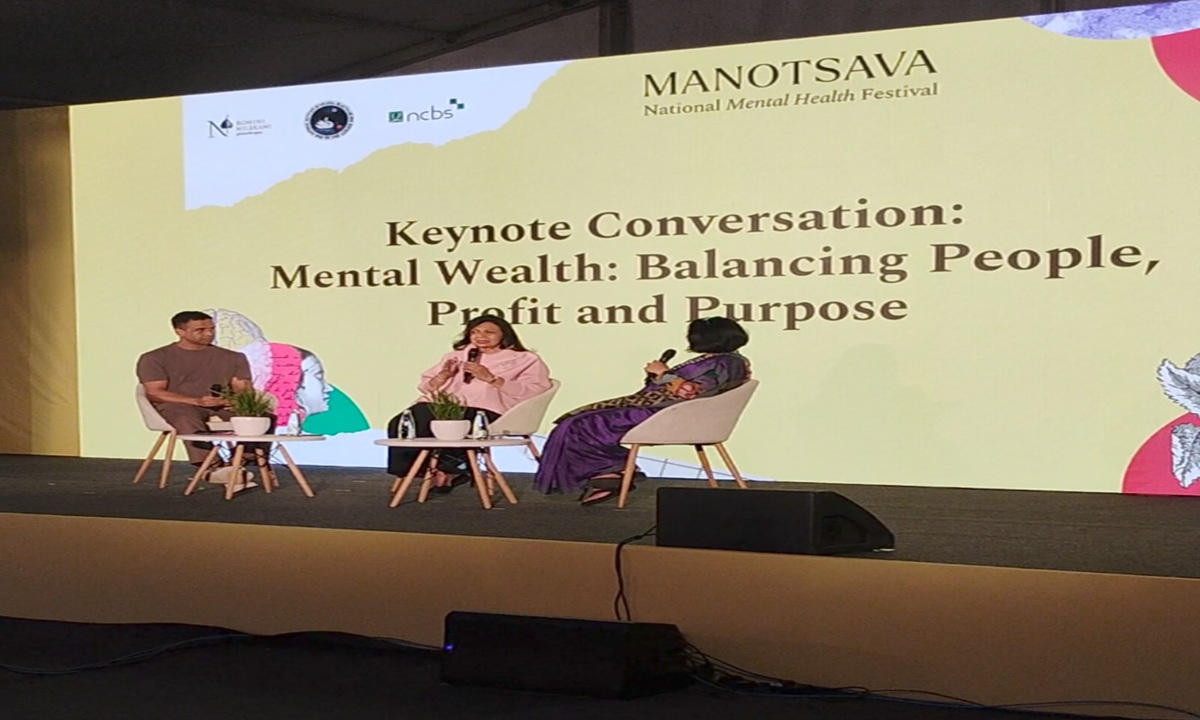
The festival began with multiple talking panels, amongst them one chaired by industrialists such as Mr Nithin Kamath, CEO of Zerodha, who spoke, “That once you have everything you need and want, your mental wellness is what really matters.”He was speaking to a group of over 6,000 attendees. Kamath was sitting with Kiran Mazumdar-Shaw, Chairperson of Biocon Group, and Rohini Nilekani, Chairperson of Rohini Nilekani Philanthropies. Three well-known personalities in Indian business gathered to discuss mental wellness- a conversation that is just starting in the country.
Keynote Conversation – (From Left to Right) Nithin Kamath, Kiran Mazumdar Shaw, Rohini Nilekani
The panel spoke together at length about how businesses today need to make money, but that helping others and giving back to society is what really makes us happy. The conversation shed light on an aspect: that even the most successful businessmen in India are thinking about what is important to them beyond just making a profit, and what their purpose is. It is not just about making money.
Parenting in the Age of Algorithms
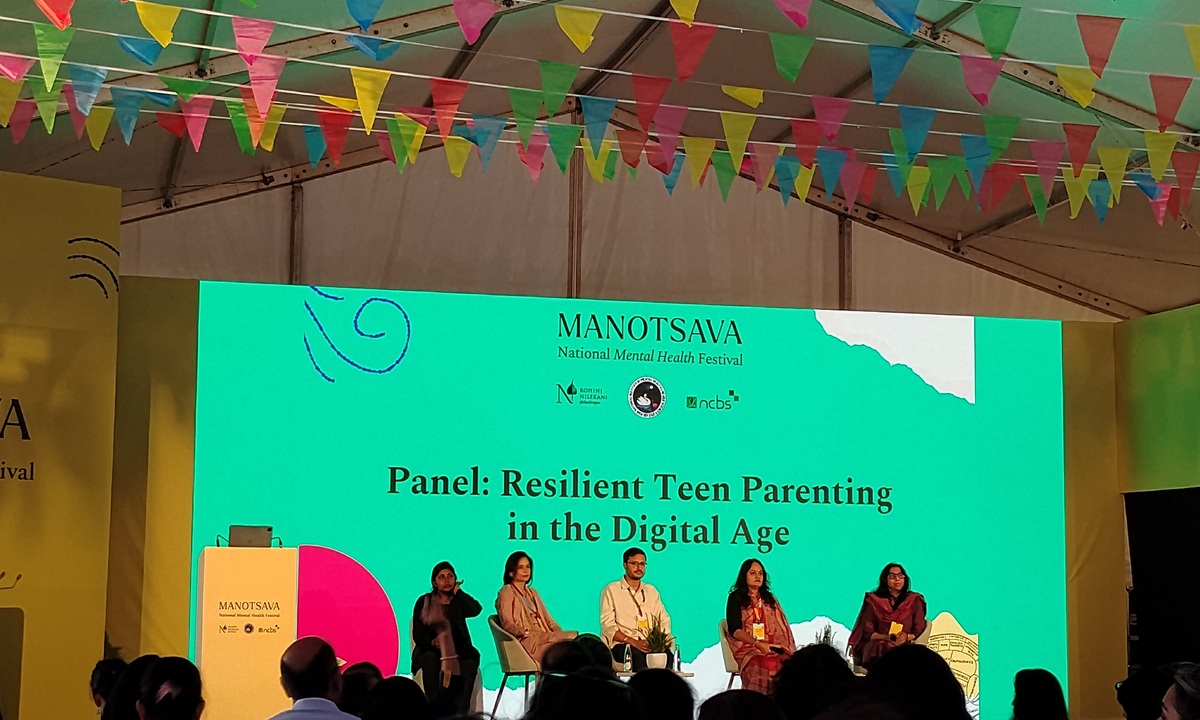
Manotsava has become a promising platform that addresses neglected issues. In one of its other sessions, named ‘Resilient Teen Parenting in the Digital Age’, author and resilience coach Sujata Kelkar Shetty brought up the topic of parents being willing to be ideal in front of their children and pretending to be perfect. Shetty urged parents to stay honest and real, especially when it comes to parenting in the digital age. The session put a spotlight on practising honesty as a virtue with today’s children, who are more emotionally and mentally aware.
(From left to Right) – Sujata Kelkar Shetty, Angad Singh Malik, Prof. Deepti Navaratna, and Chitra Iyer (Moderator)
The panel also had Professor Deepthi Navaratna from the National Institute of Advanced Studies, who told parents to set boundaries. She emphasised that parents should also demonstrate how they feel when those boundaries are not followed. She continued, “You should get involved in the things your children like. Spend time with them. That is how you build trust, with your children.” Joining her was Angad Singh Malik of the Eight Goals One Foundation, who caught the attention when he said, “kids need to know that things in life are usually very different from what they see on the internet.” His statement was simple: help your kids navigate the gap between the fantasy world they see online and the truth they see offline.
When Life Changes Overnight
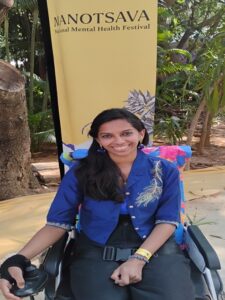
Ashwathi – Mental health advocate
The festival brought people of inspiration, like Ashwathi (who suggests using her first name), under one roof. A survivor of a neurodegenerative disorder, she shared how 25 years of her life were fit and healthy without any complications. While talking to the voices, she expressed that her diagnosis turned her world upside down, and had it not been for resilience and acceptance, embracing would have been difficult. She emphasised that, irrespective of how supportive and good one’s surroundings are, maintaining one’s mental health is in one’s own hands. Hence, inculcating emotional intelligence, social well-being and mental health from childhood is vital. In her final remarks, she requested that mental health festivals must happen even in small cities and in regional languages to be more impactful and to connect with the masses.
Building an Indian Brain Database
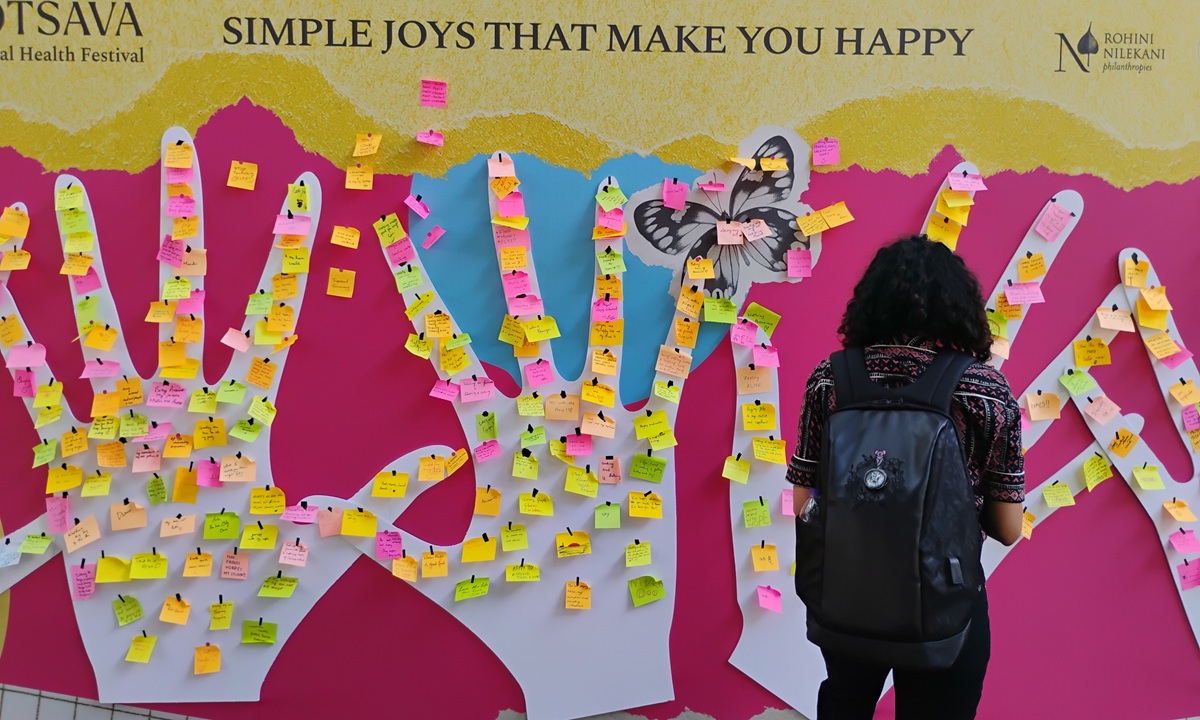
Glimpses of the simple joys of others written on sticky notes
Manotsava’s promise to become a platform for every cadre was genuine, as we encountered students from NIMHANS and NCBS at their stalls, explaining their research on brain disorders through various posters to visitors. Their efforts put a spotlight on how India’s support for its people with illnesses can change.
Gagana B R, a fourth-year PhD student at NCBS, explained how her team is using patient blood samples to generate stem cells and neurons. They are looking at the blood samples from patients with the disorder to compare cells with bipolar disorder cells. The team is trying to understand what is happening in the body that causes bipolar disorder.
These efforts are made to learn more about the disorder and how it affects Indian patients, as there is a lack of research data relating to bipolar disorder among patients in the Indian context that is not widely available, and the team’s research work at NCBS is significant in this regard. She then expressed hope, saying that their research efforts will help generate many effective and more efficient alternative therapies to the existing Lithium treatment for bipolar disorder.
Literature = Healer in Disguise
Manotsava proved itself to be a 360-degree compass for the mental health festival. The festival brought together a plethora of people under one roof to assure its attendees that it is normal to discuss Mental Health issues because they occur to everyone without any bias or prejudice. One such example was with a strange stall manned by Dr Suhas Ganesh, a psychiatrist at NIMHANS.
Dr Suhas Ganeshset up this stall through his foundation, Manosuraksha, which collected a collection of Kannada poetry and novels. According to him, literature can be good for people’s health, like a kind of therapy; poets and novelists are like healers, mediators as they write about people, and their stories convey different feelings. People can read about these characters and think about their own lives. By reading books, people can find ways to deal with their problems and feel better about themselves.
Although the idea that stories heal is ancestral. However, it is becoming important again in a world with a lot of information but not enough meaning. Stories heal people. This is something that people are starting to care about again. The world is full of data. People are looking for something that gives their life meaning. Stories heal is what people need to hear.
Unplugged and Present
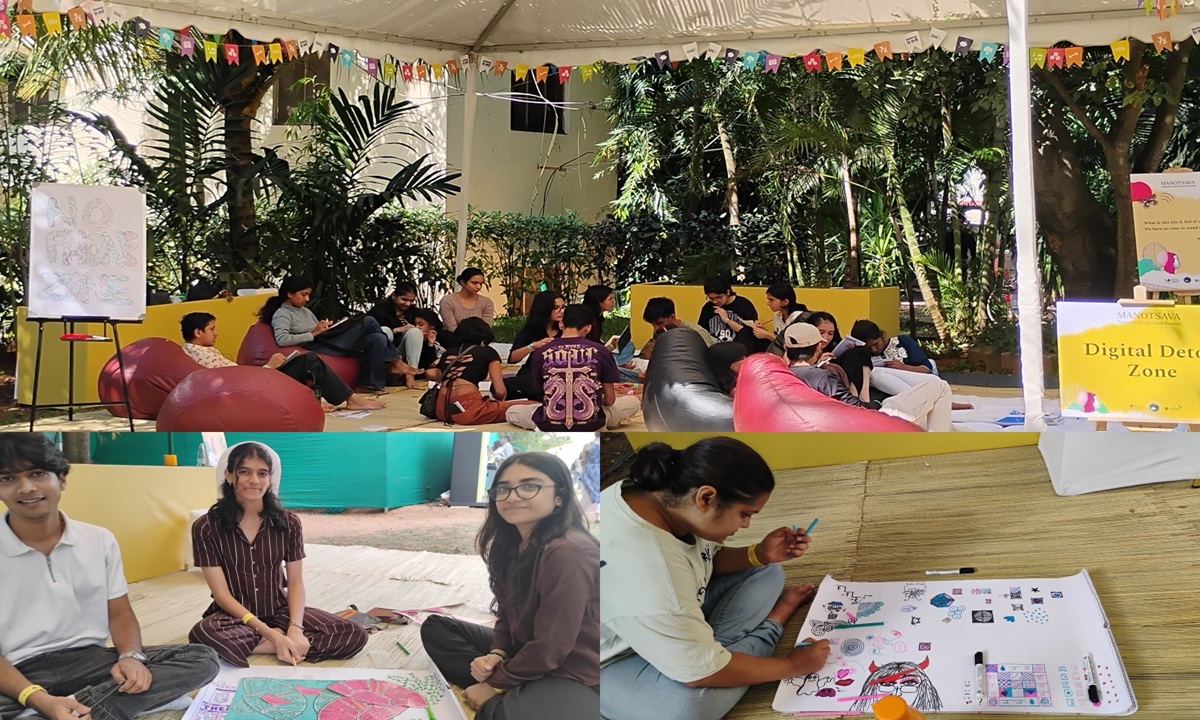
Visitors experiencing a Digital Detox environment.
Another highlight of the festival was the Digital Detox Zone. People turned off their phones, created paintings, and made mandala art used when people meditate. The scene was really something. Filled with laughter, conversation, and creativity without anyone looking at a screen. This was an experience of a kind, to see what life might be like if we reclaim our attention from the algorithms and do not let them control us. It showed that life can be good without screens.
Sharing is caring – People sharing experiences
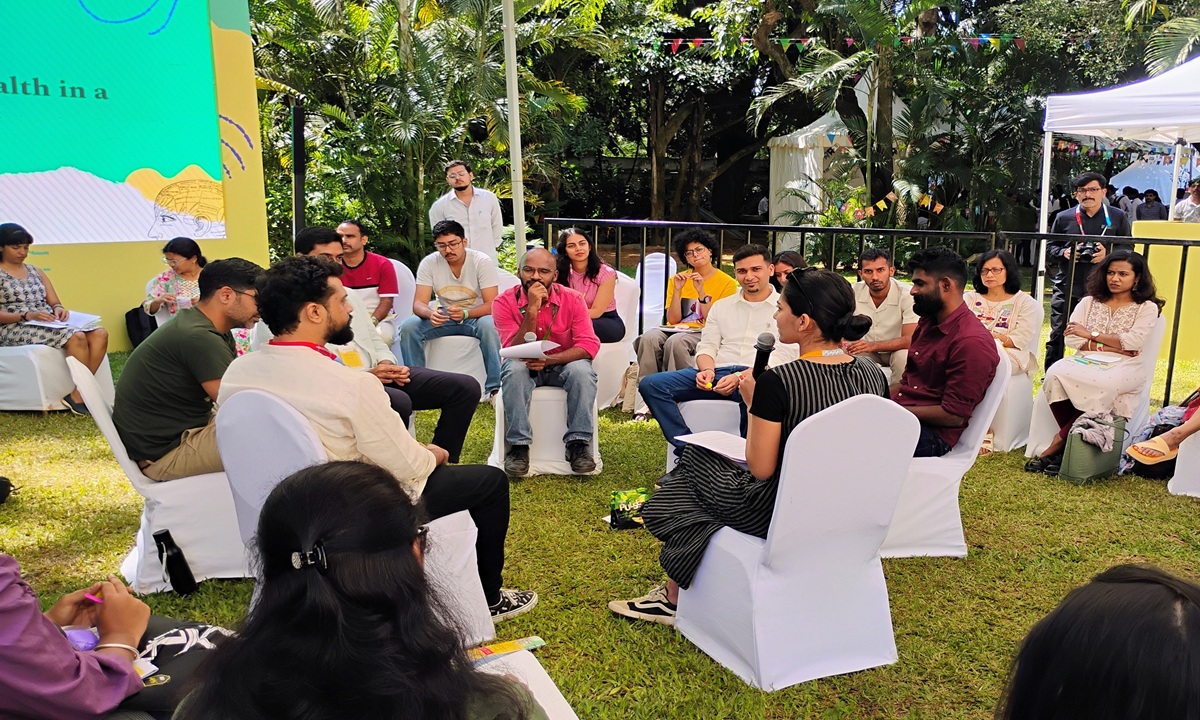
An add-on to the festival was the sharing circles, where attendees engaged in conversations and just relaxed. People communicated about a variety of topics, including marriage, relationships with siblings, life at 50, gender, and adoption. These are things that people usually do not talk about with others. The Sharing Circles had lively discussions, and people were very honest, sometimes even getting a little emotional when they talked about these things.
Breaking the Silence
The exhibition stalls at Manotsava festivals were very helpful. There were more than 30 stalls. These stalls had information about how our brain works. They also had information about managing stress. People could learn about dementia and how to prevent suicide at these stalls.
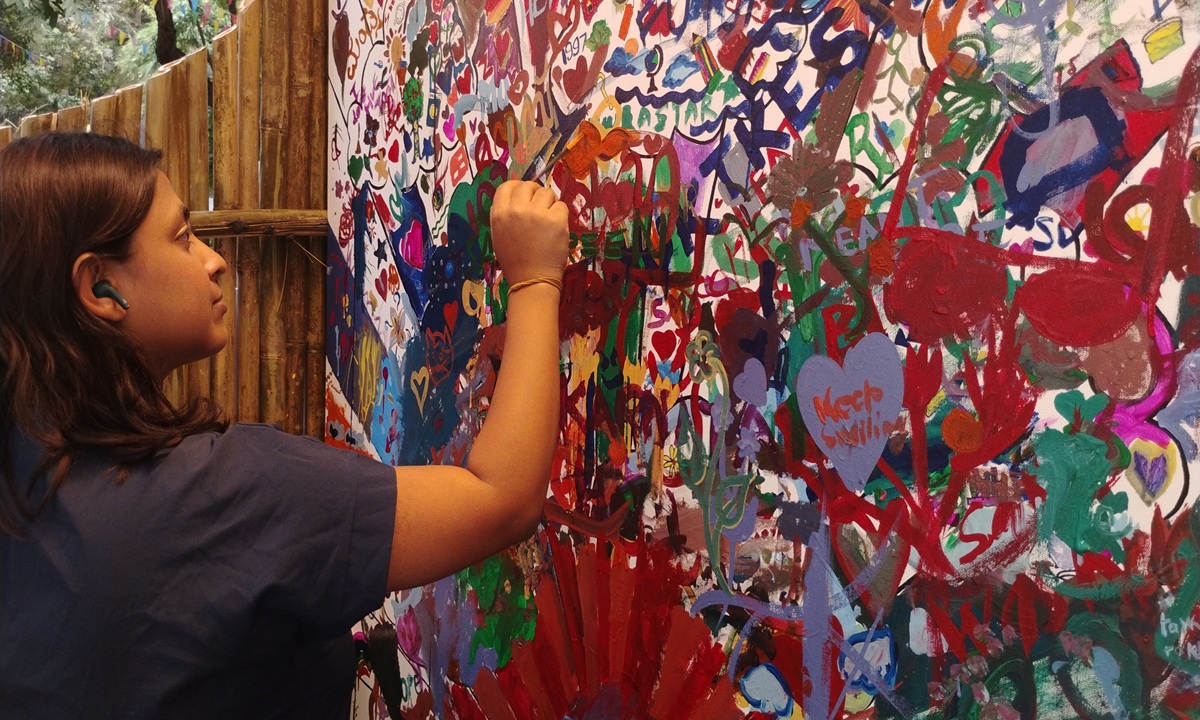
Add Your Colours – Pick a brush and paint freely – Let colour speak for you.
The festival was really something, and it wasn’t just because of the information people shared. The festival was special because of the atmosphere that the festival created. At the festival, people from different age groups, with different jobs, and from different backgrounds were all talking to each other. People at the festival were really talking about the things that’re hard for them, the things that scare them, and the things they hope for. The festival was a place where people could talk about their struggles, fears, and hopes.
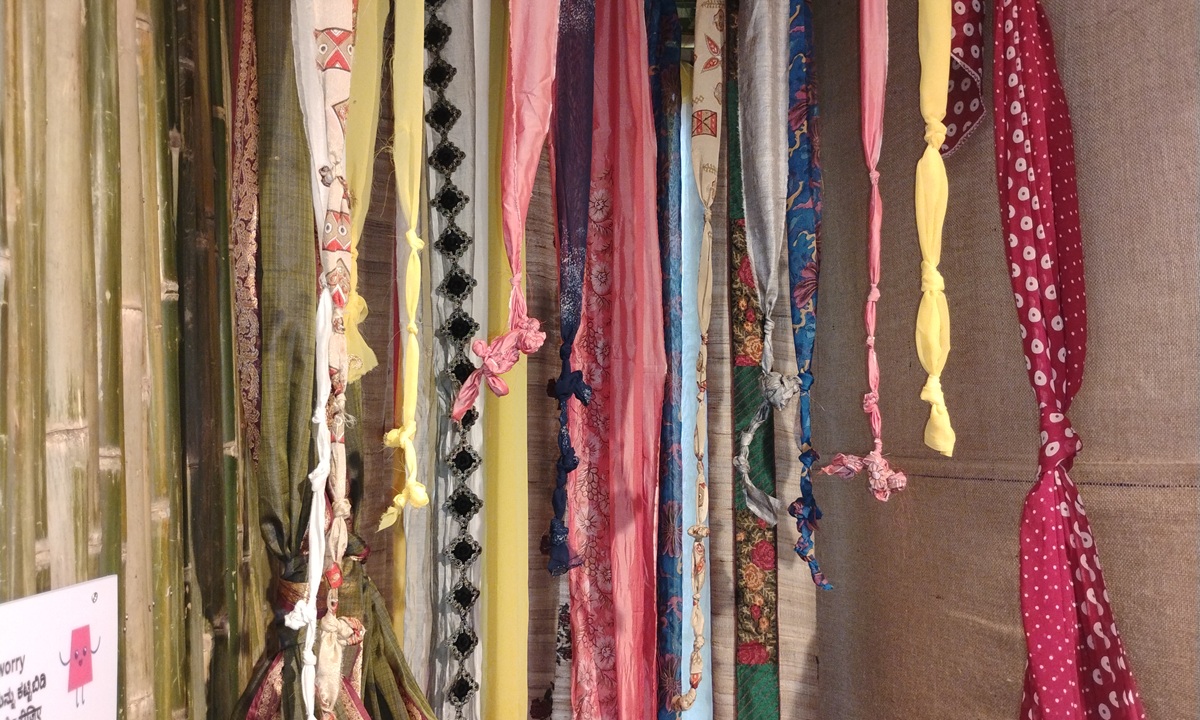
Tie a Knot – lock your worry – a small, symbolic act of leaving the worry
Although it is over, Manotsava left us with an array of questions to introspect on and find answers to. Can big gatherings and people talking in public really drive big changes? Can people who know about things actually get what they need? Does talking about health problems really mean people will get the help they need for their mental health?
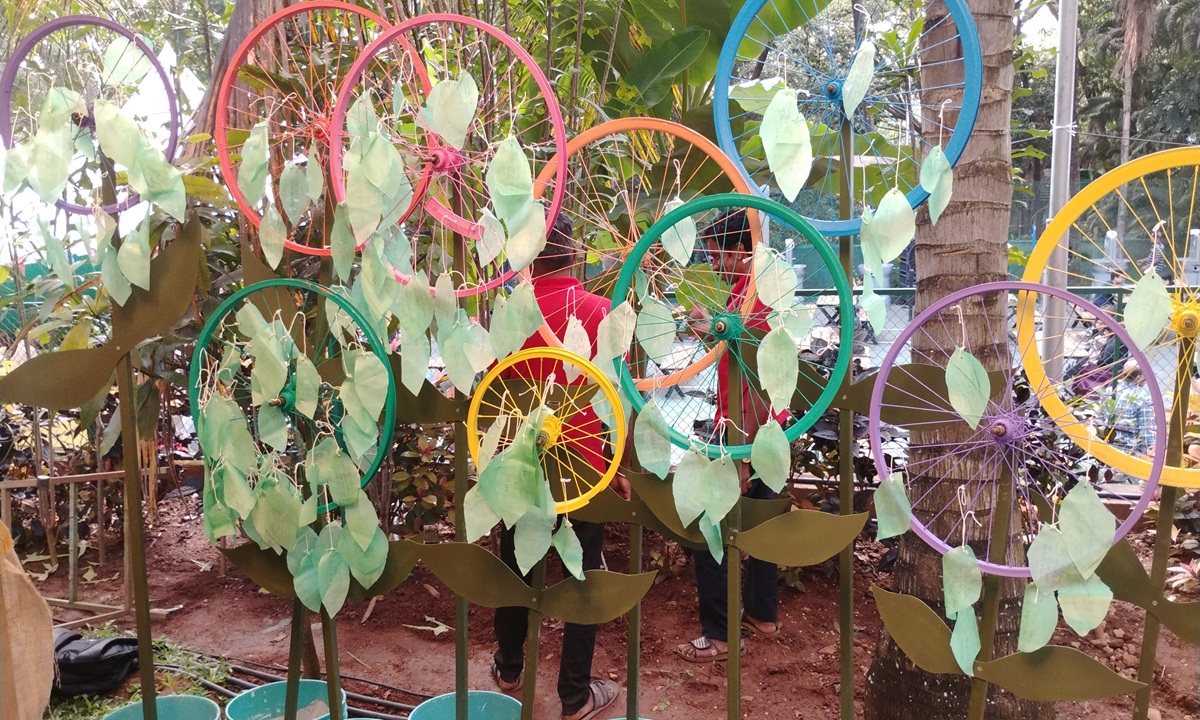
Add a Petal to the Collective – Tying worry petal to the flower wheel. – a reminder that people are not alone in what they carry. Giving the wheel a gentle spin indicates that worries move and transform
Until then, Manotsava offered something valuable: proof that Indians are ready to have this conversation. The silence is breaking. Now comes the harder work of building the support systems to match.
Harshavardhan J, an engineer by qualification, from Chitradurga, Karnataka is a Patent Agent by Profession...
He is a technology, space and innovation enthusiast. He has written articles in Kannada for local dailies and has Authored a book on Outer space - 'Huli drakshigu Nurentu Niyama' in Kannada. The book covers the Human centric view like Property, Accountability, Business, Cooperation and Asteroid mining in Outer Space.