

The City Arts Project, Abhivyakti, is a unique art and cultural event held in Ahmedabad. Now in its seventh edition, the project brings together emerging and established artists from across India. When it was launched in 2018, the idea was to provide independent artists with a nurturing space and to feature local stories and talent through an approach-and-curate method. In subsequent editions, the founders have invited fresh concepts while providing mentorship and financial support for premieres of selected productions.
Harsh Gohel, a student reporter at The Voices, visited the exhibition this year and witnessed a broad array of cultural expressions. The festival provides audiences with an opportunity to explore various art forms, underscoring the importance of art and creativity in contemporary life.
Featured below are some of the exhibits that the Team Voices visited and engaged with.
Multiple Encounters
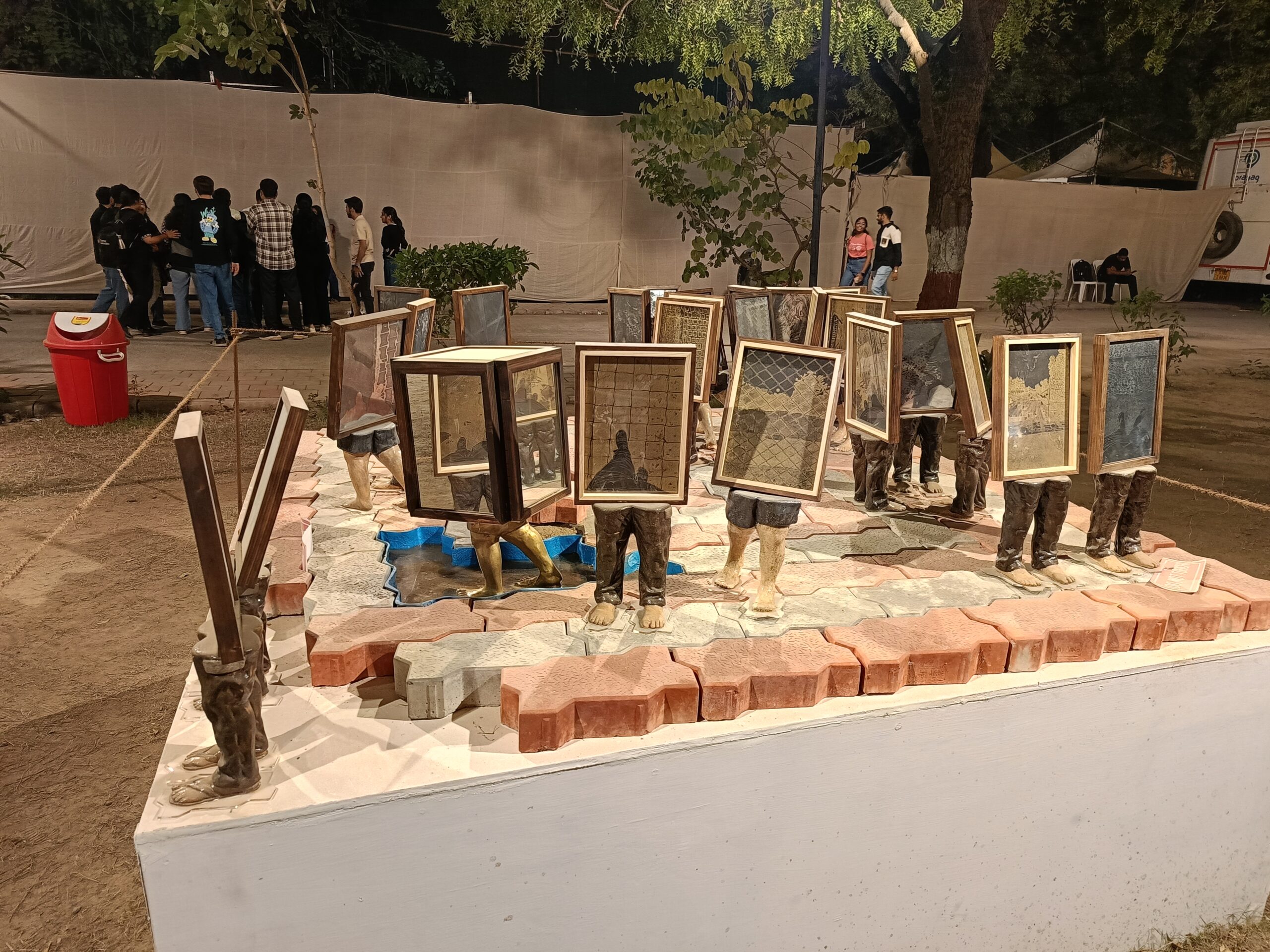
The installation employs etching methods on zinc, ceramic, terracotta, cement, sand and water. Rooted in the artist’s daily walks through Vadodara, the work evokes the sensory experience of moving through urban spaces. It features forty to fifty etching frames supported by ceramic pillars on a terracotta surface. Each frame reflects fragmented architecture and environments, transforming the artwork into a poetic visual dialogue between textiles and memory.
Imprints
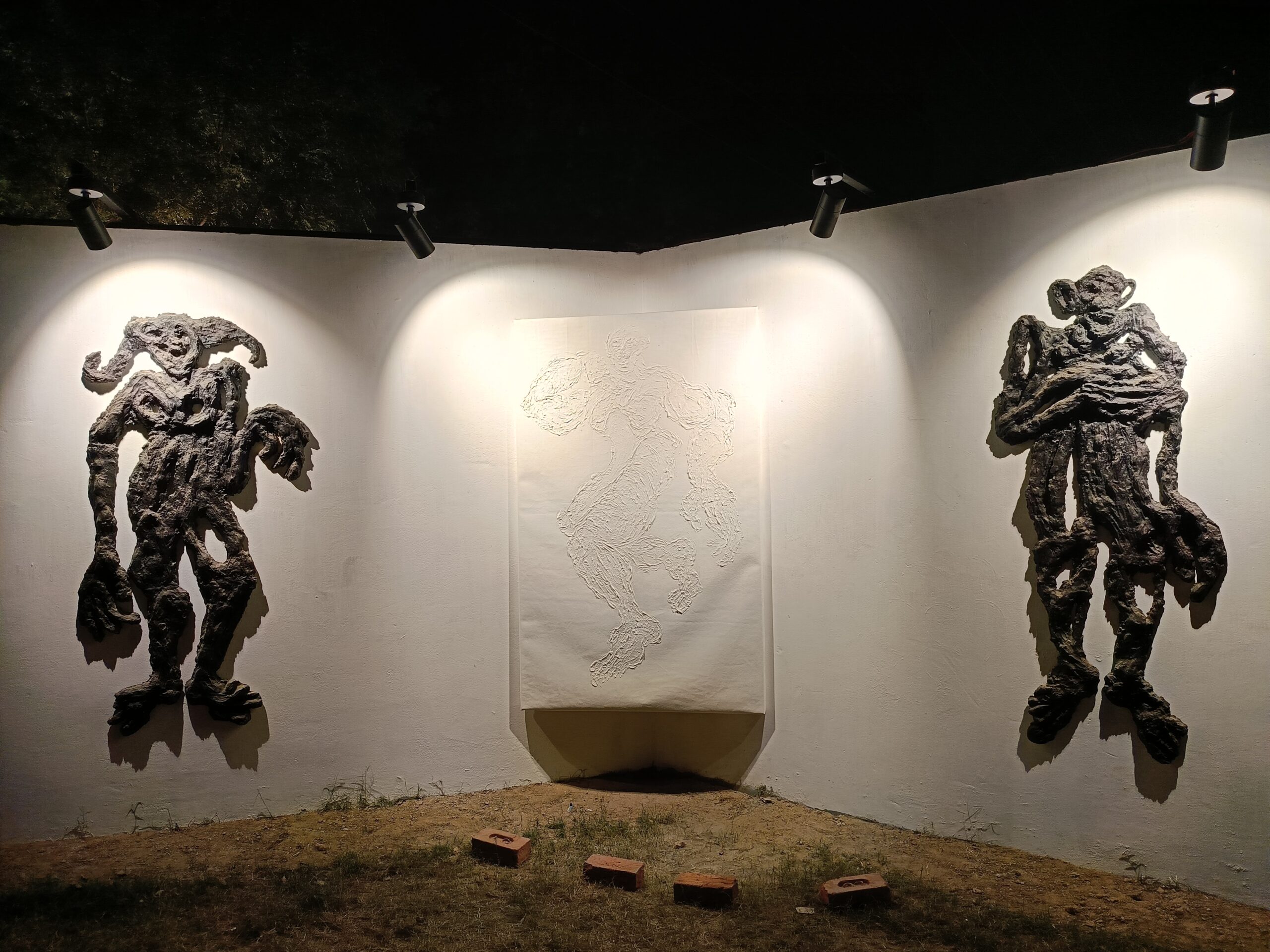
This artwork captivates its audience through a series of small actions—a weight on the shoulder, a subtle curve in the spine, a hand that swings in uncertainty—and through them asks what holds all these gestures together. Each sculpture begins as a line of bent aluminium, gradually taking on a larger form, constructed with mesh and dental plaster of Paris. The forms are intentionally distorted, not to disintegrate or challenge the body, but to reveal its expressive potential. Some parts remain light, almost skeletal, while others become dense and heavy with emotion.
And Joy Shall Overtake Us
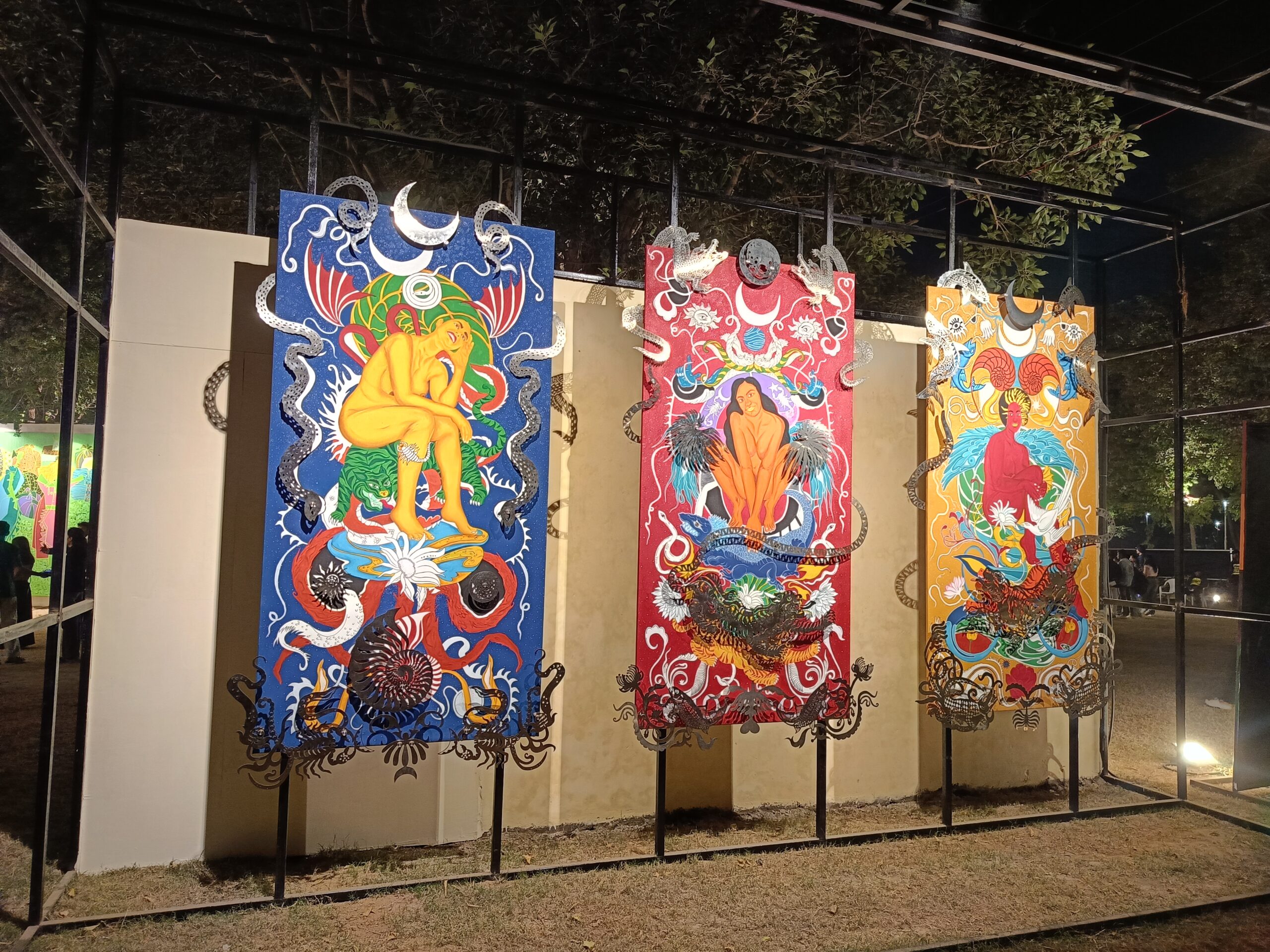
Yasha Shrivastav’s And Joy Shall Overtake Us suggests a narrative of powerful emotional transformation through works that present women in imaginative forms. Flowing figures, blooming flowers, celestial symbols and organic forms come together to represent desire and vitality. The vibrant images depict figures in states of contemplation, liberation and connection with their surroundings.
Shared Flame
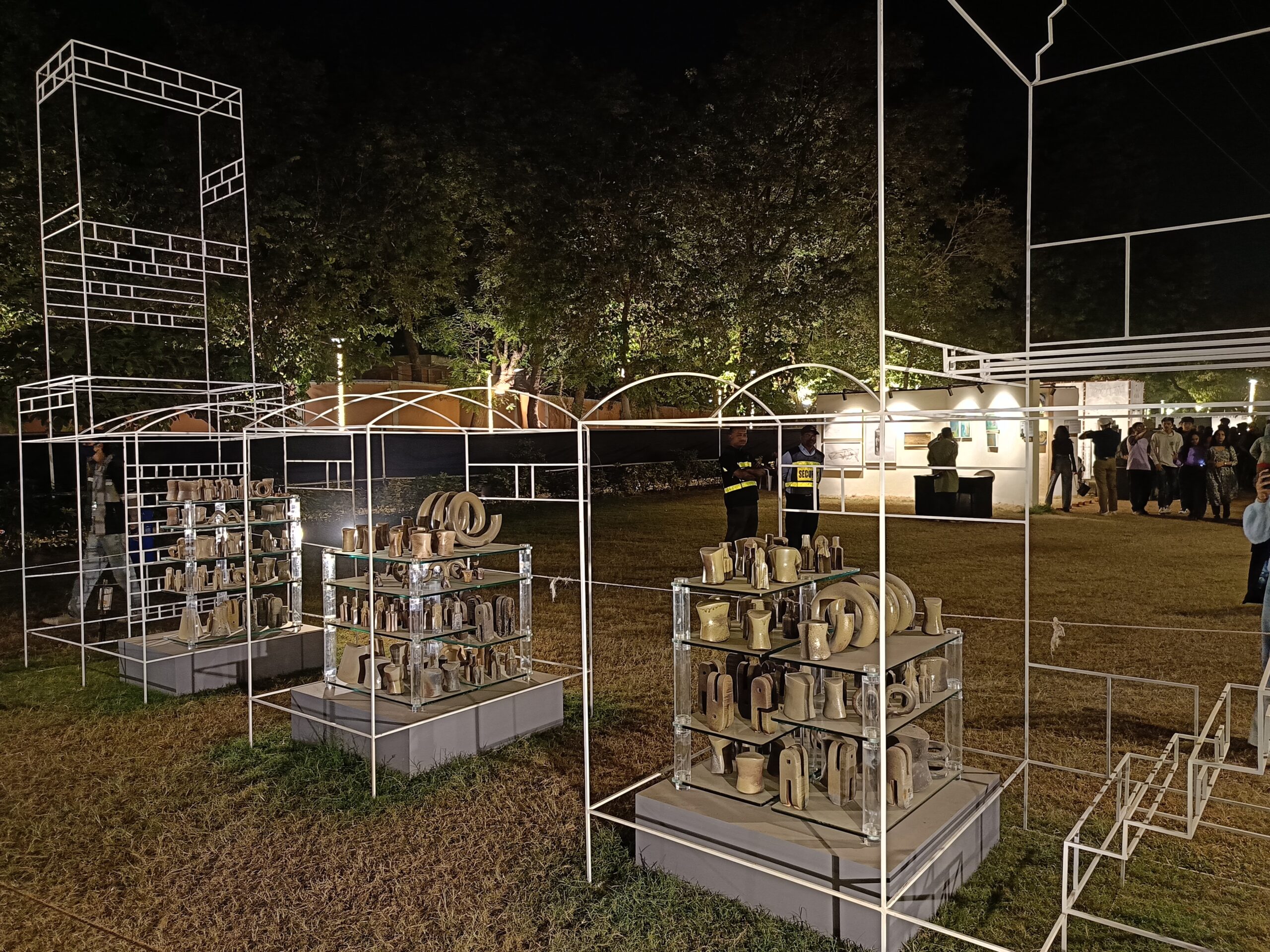
This structure combines ceramic, metal, and glass in a suspended spatial arrangement, depicting the interior of a wood-fired kiln. The sculptural forms, each bearing imprints of fire and ash, are arranged within a framework of glass and wire that reflects the internal flow of the kiln. The interplay of molten glaze, metal and translucent glass textures reveals a dialogue between material resistance and transformation.
Childhood Tractor
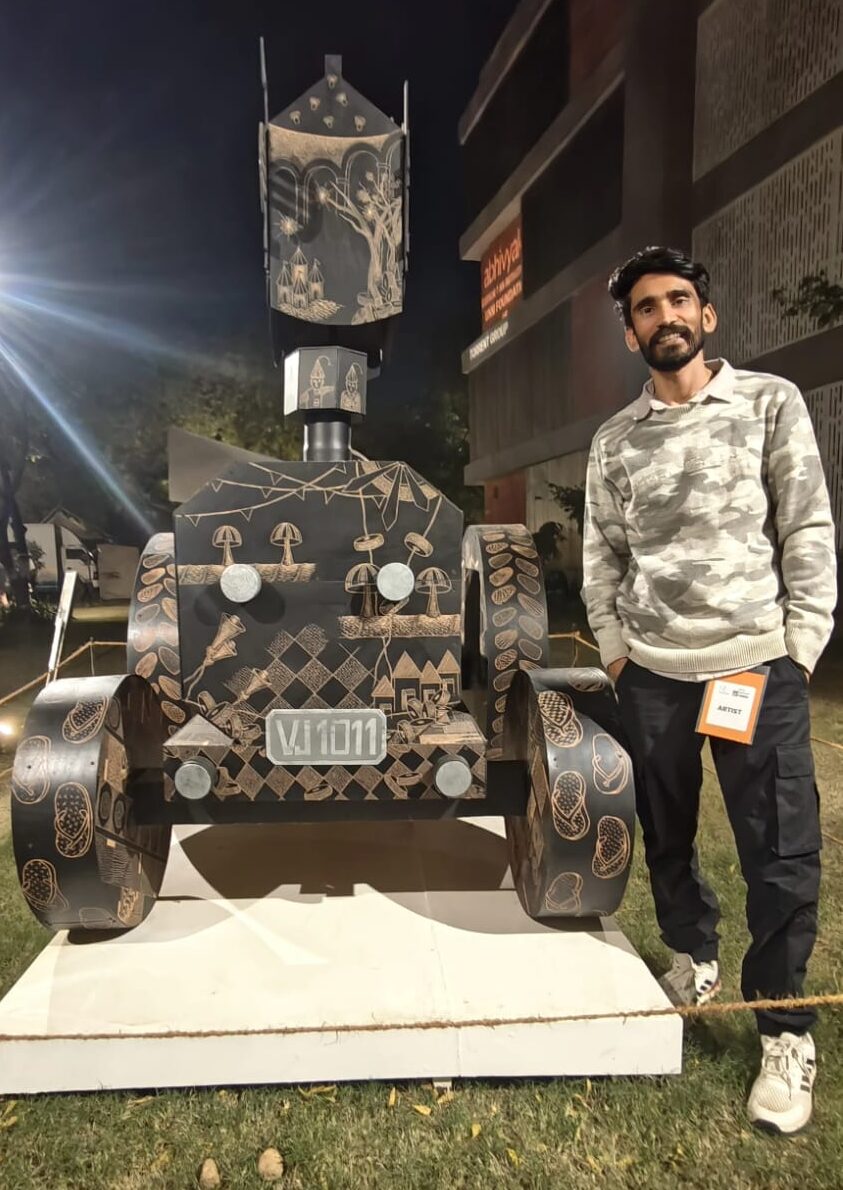
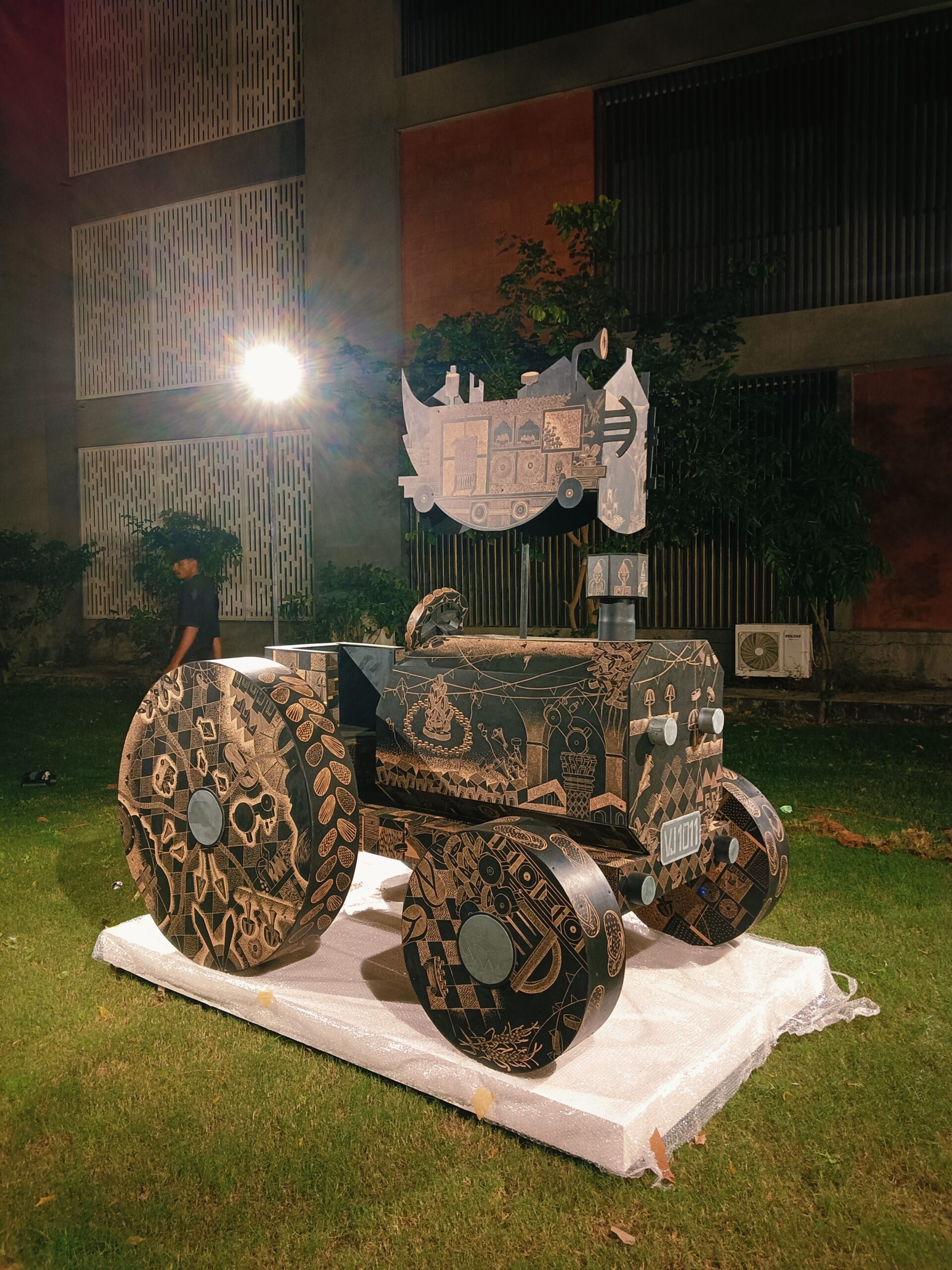
Vijaysinh Beniwal hails from Jogiwala, a small village in Haryana. In conversation with The Voices, he said his work has been largely influenced by the functioning of society. Speaking about his artwork on display, he said, “Childhood Tractor stems from my deep connection with my village, where my childhood unfolded on unpaved roads and open fields.”
Inspired by the simple wooden toy tractor of his childhood, his creation transforms a humble object into something monumental. Six feet wide and seven feet tall—the size of an actual tractor—its wooden surface is carved with fragments of lived experience: farmers, fields, lakes, streets and traces of vibrant rural life.
Wrong Plate
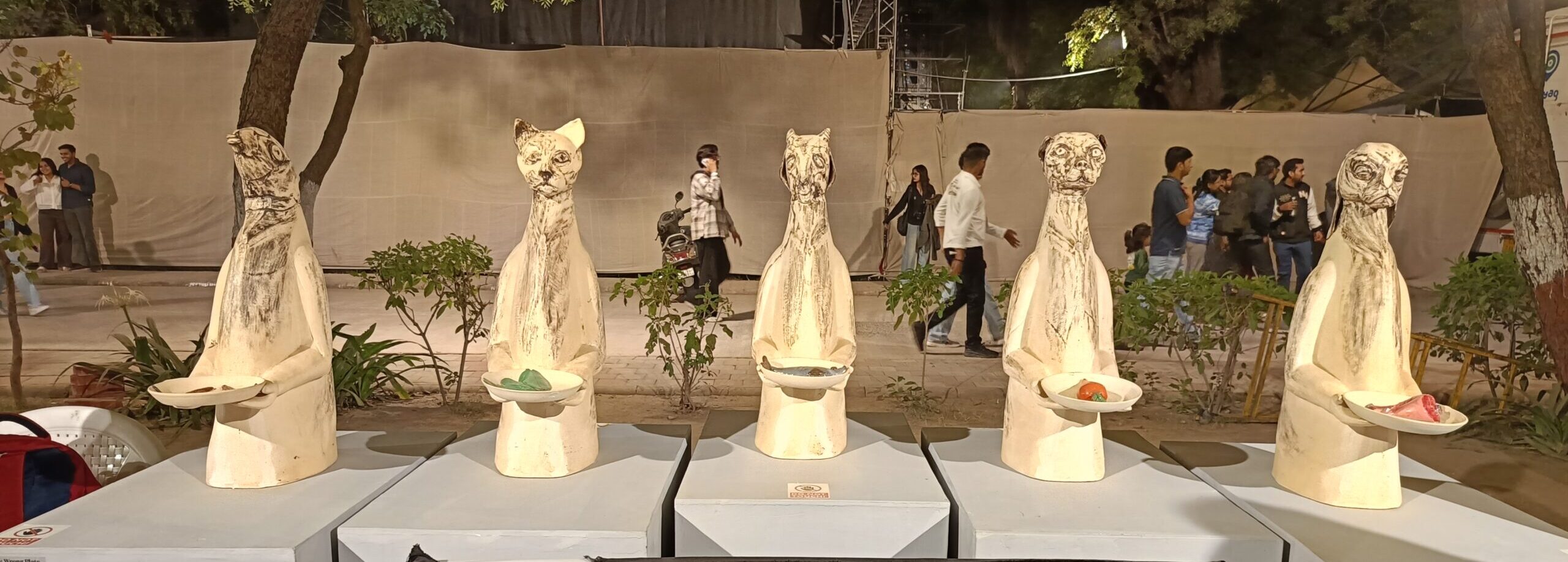
The artist created “Wrong Plate” as a ceramic artwork using stoneware clay. It reflects on injustice and imbalance in society. For the artist Sauvik Haldar, this idea evolved from the observation that people often acquire things that do not truly belong to them. Those who already have in abundance continue to receive more, while those in dire need receive far less or nothing at all. On display are statues of five animals, each shown with a plate of food unsuitable for them—barring the fish, which, though given food appropriate to its species, also bears a message in the larger context.
Life Partner: Domestic Edition
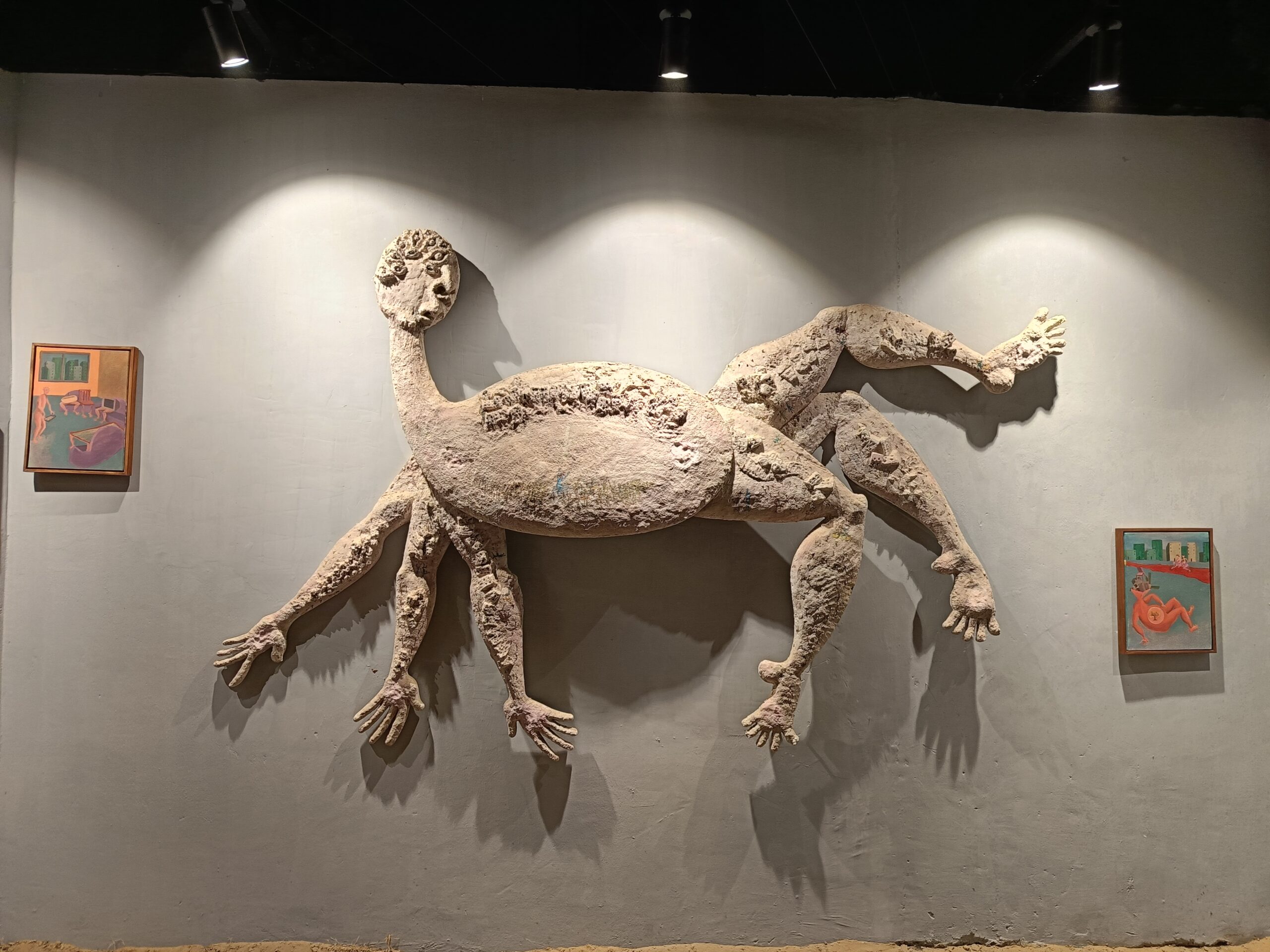
Saket Vishwakarma is a visual artist from Madhya Pradesh. He moulded his art piece, Life Partner: Domestic Edition, using papier-mâché and acrylic colours. The work explores a conceptual question: what if we marry things? The artist believes that objects are no longer just tools—people tend to develop deeper relationships with them. They feel their presence, take care of them, rely on them, and, over time, these objects come to recognise them.
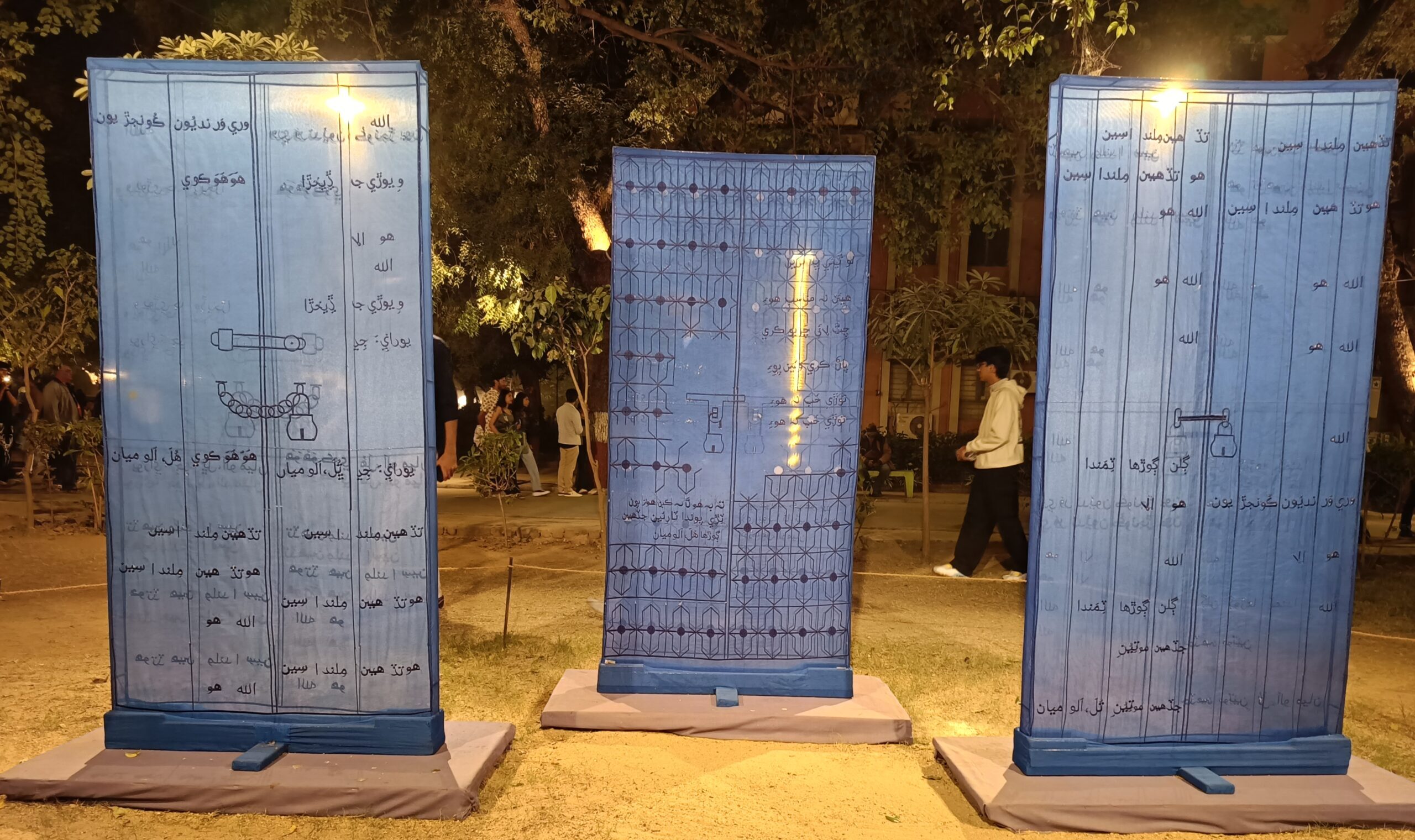
TRE DARŘ (Three Doors)
The installation, titled Tre Darř, reimagines the three locked doors of the artist Riya Chandwani’s childhood home—symbols of security, fear, and memory. The artist transformed them into delicate translucent panels, embroidering them with locks and including Sindhi text in Urdu script.
Eye of The Journey
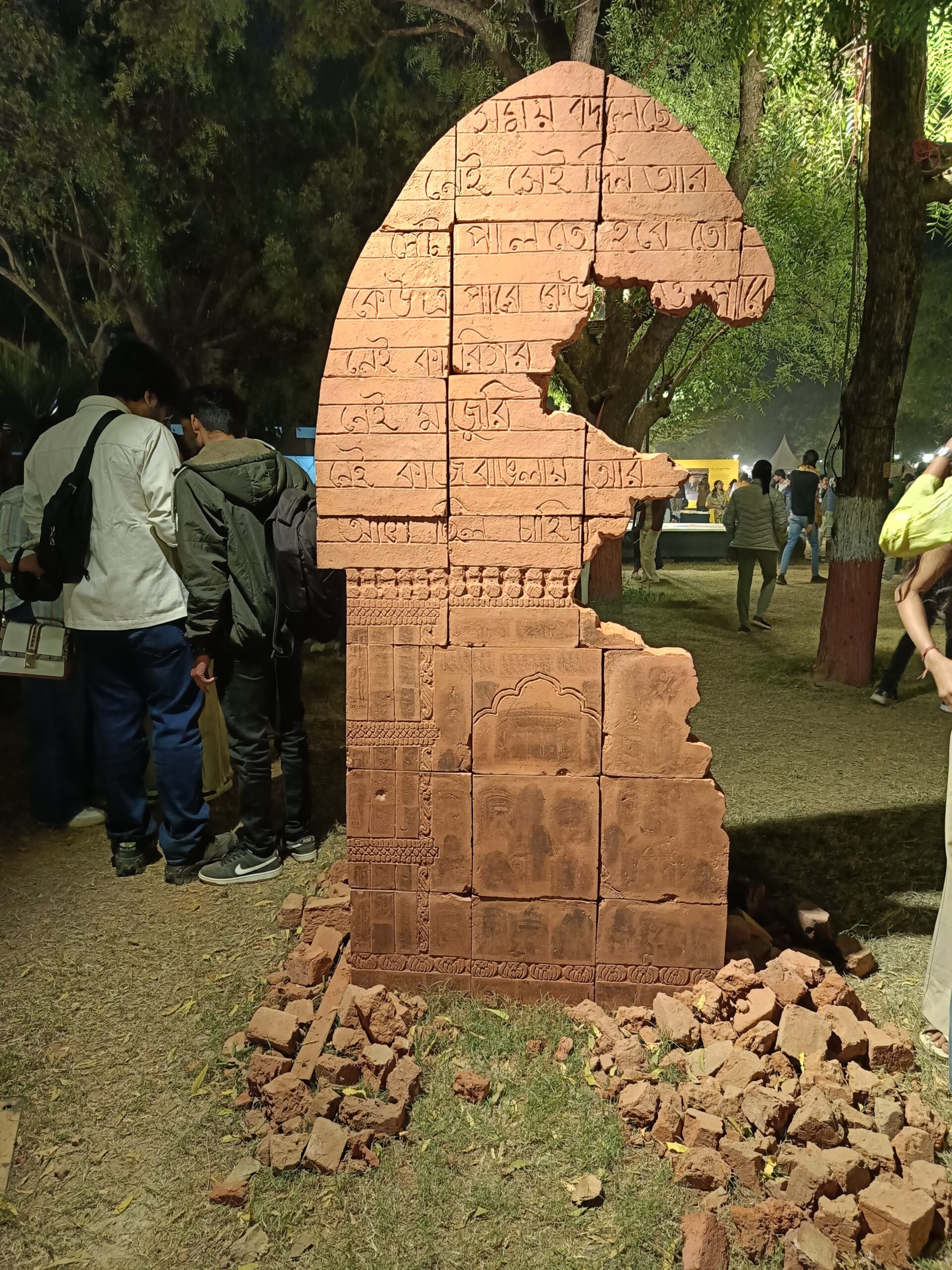
The work, Eye of the Journey, is about the terracotta architectural and cultural heritage of Murshidabad, which is facing destruction due to neglect and the after-effects of Partition. Nirmal Mondal has used these works to emphasise the conflict between an abundant past and a stark present, and has taken material for his work from the local riverbed.
Kuch Toh Log Kahenge.. Logon Ka Kaam Hai Kehna
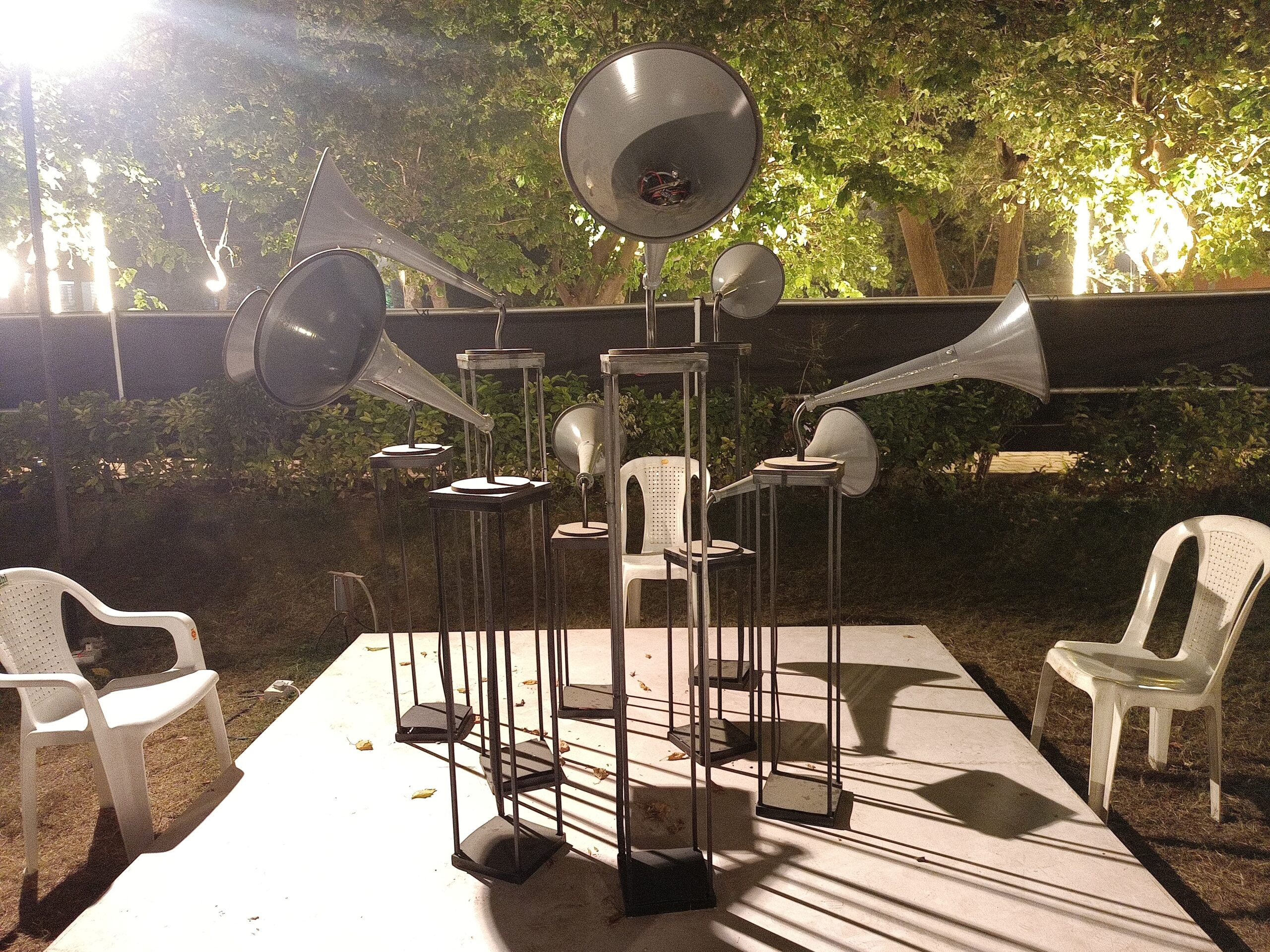
Kiran Tamboskar’s work Kuch To Log Kahenge… Logon Ka Kam Hai Kehna turns the social critique of an average day into a sensory experience.
It is a depiction of the invisible chorus of public opinion, reflecting social noise—the voices that murmur, echo and overlap. The artwork uses sculpture, sound and interactive technology to create a metaphor for a living being, exploring themes of collective observation and individual response.
EDITED BY: Arunima Maharshi