
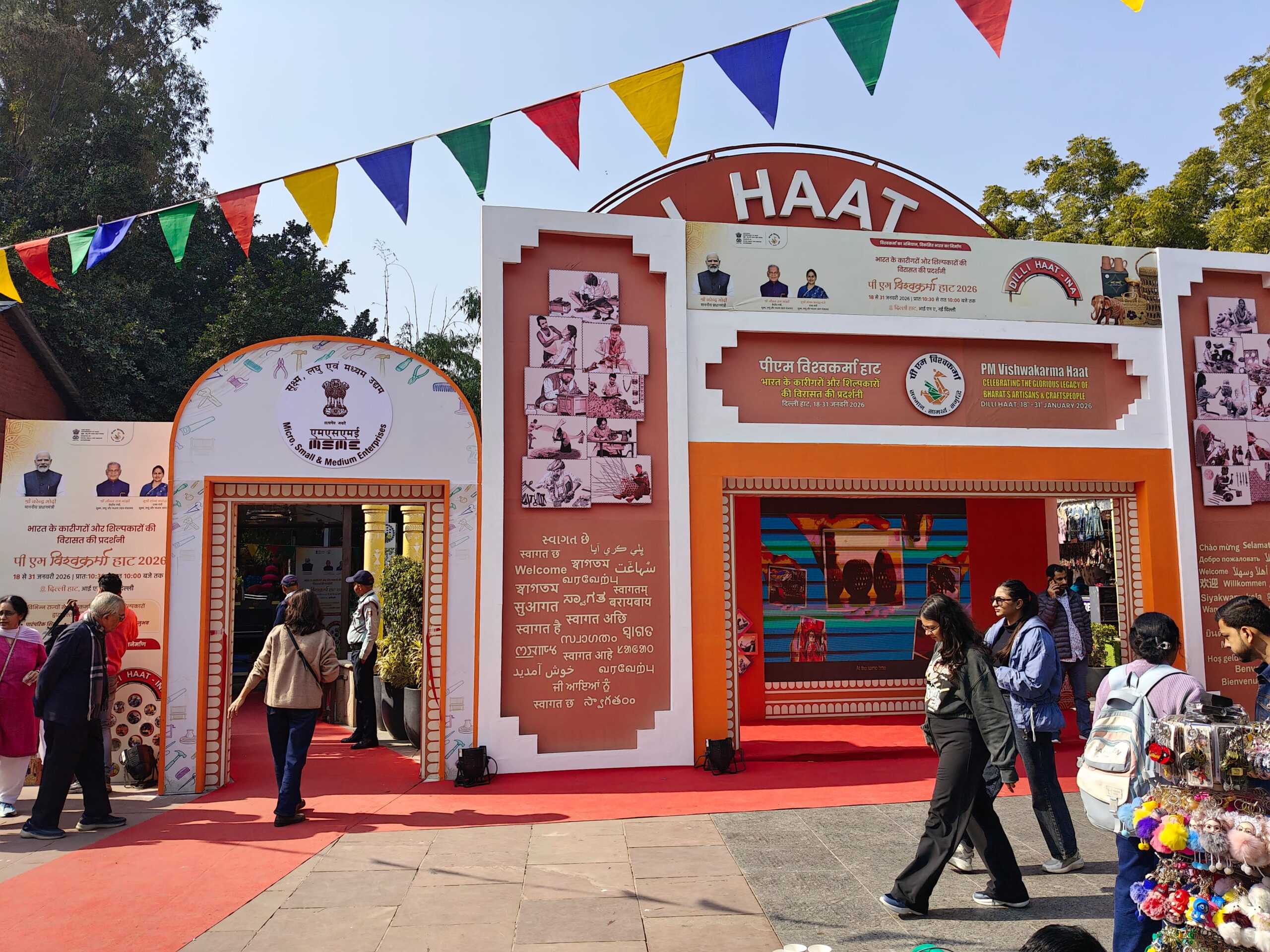
The PM Vishwakarma Haat 2026, held at New Delhi’s Dilli Haat, saw the Vishawkarmas (skilled craftsmen) exhibiting the best of diminishing forms of art from Kashmir to Kanyakumari.
Wielding his camera, the Voices student reporter captured various forms of art, their artisans, and their never-say-die spirit that has brought their art out of the dingy lanes of their native places to the swanky platform of Dilli Haat.
The handmade products sashayed before national and international buyers, stakeholders, and the general public, thereby addressing the last-mile visibility, sales, and recognition they deserve.
Renaissance of Craftsmanship at PM Vishwakarma Haat 2026
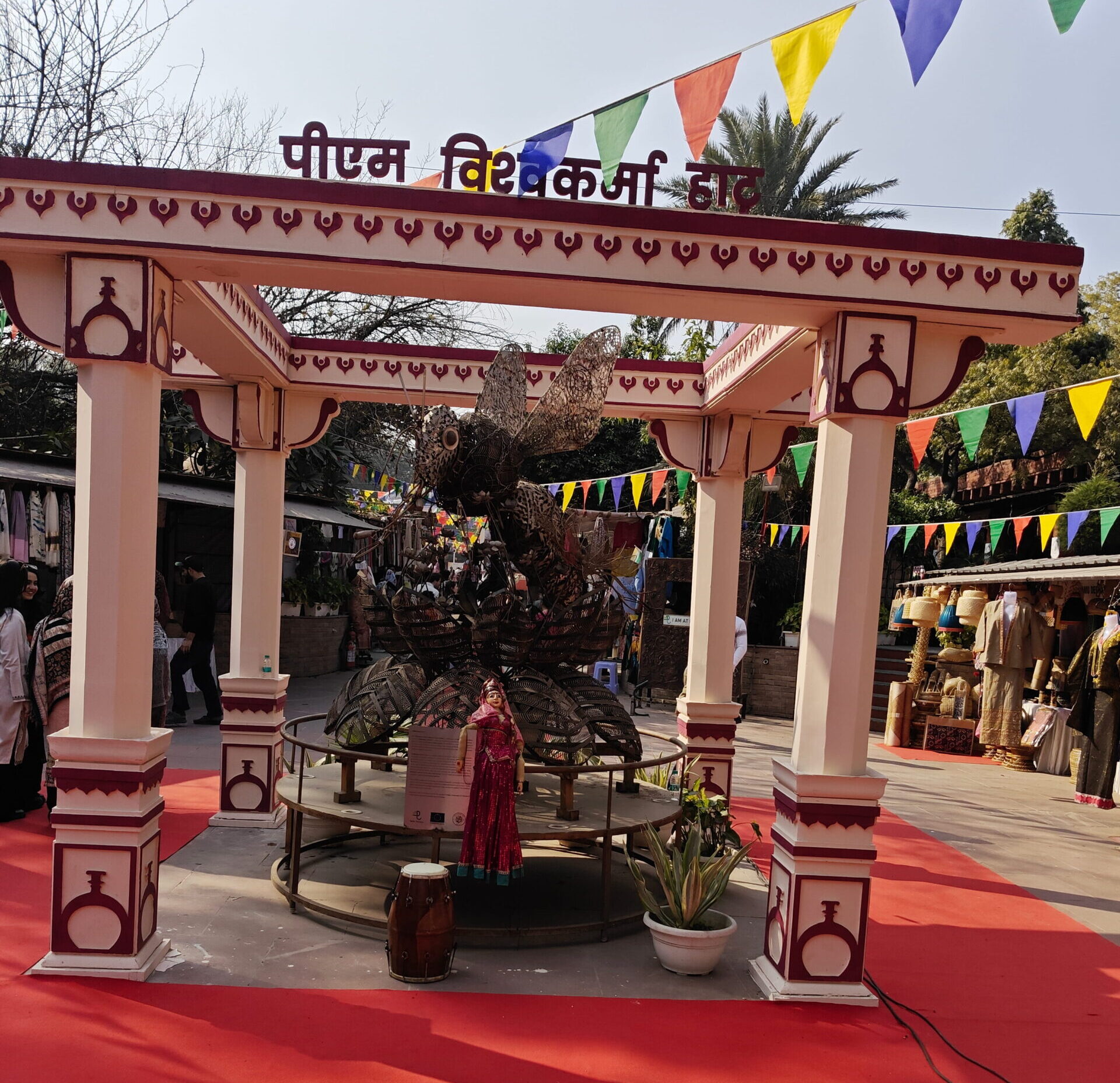
The Vishwakarmas are India’s timeless creators: potters, carpenters, sculptors, toy makers, etc., who shape sand, wood, and metal into culture. PM Vishwakarma is a central scheme launched in 2023 for a period of five years, with the aim of empowering traditional artisans and craftspersons from villages. These artisans are integrated into formal market systems. The artisans’ skill sets are inherited from ancestors, but the community remains largely unorganised and hence unable to market their products at the right level.
The Timeless Craft of Dhokra Art
Dhokra Art from Chhattisgarh (Bastar), Odisha, West Bengal and Jharkhand remained the centre of attraction. Among India’s oldest surviving traditional metal crafts, the Dhokra Act traces its linkages back to the Indus Valley civilisation. It’s an art form of the tribal communities of the Gond, Muria, and Maria in the Jharkhand, Odisha, and Chhattisgarh (Bastar) regions.
Prembati from Chhattisgarh told The Voices that the word “Dhokra” was derived from the “Dhokra Damar” – a nomadic tribe of traditional artisans mainly from the eastern and central India regions. In Dhokra art, artisans like him employ the lost-wax casting technique. This painstaking process ensures that every piece is unique. It’s started with sculpting a core of clay mixed with straw, over which beeswax is layered and shaped into detailed forms, such as figures of animals, ritual objects, dancers, and symbols of daily tribal life.
About PM Vishwakarma Haat 2026
The Ministry of Micro, Small, and Medium Enterprises (MSME) held the event at Dilli Haat INA, from Jan 18 to Jan 31. Union MSME Minister Jitan Ram Manjhi inaugurated the event that brought together over 117 artisans pan-India. Visitors and foreign missions from over 20 countries especially visited it and witnessed India’s rich legacy of traditional craftsmanship. Alongside handcrafted products, the Haat featured live craft demonstrations, including pottery, bangle-making, doll-making, and more, as well as cultural performances, making it an immersive experience that extends beyond a conventional marketplace. The food stalls of different states also attracted the visitors
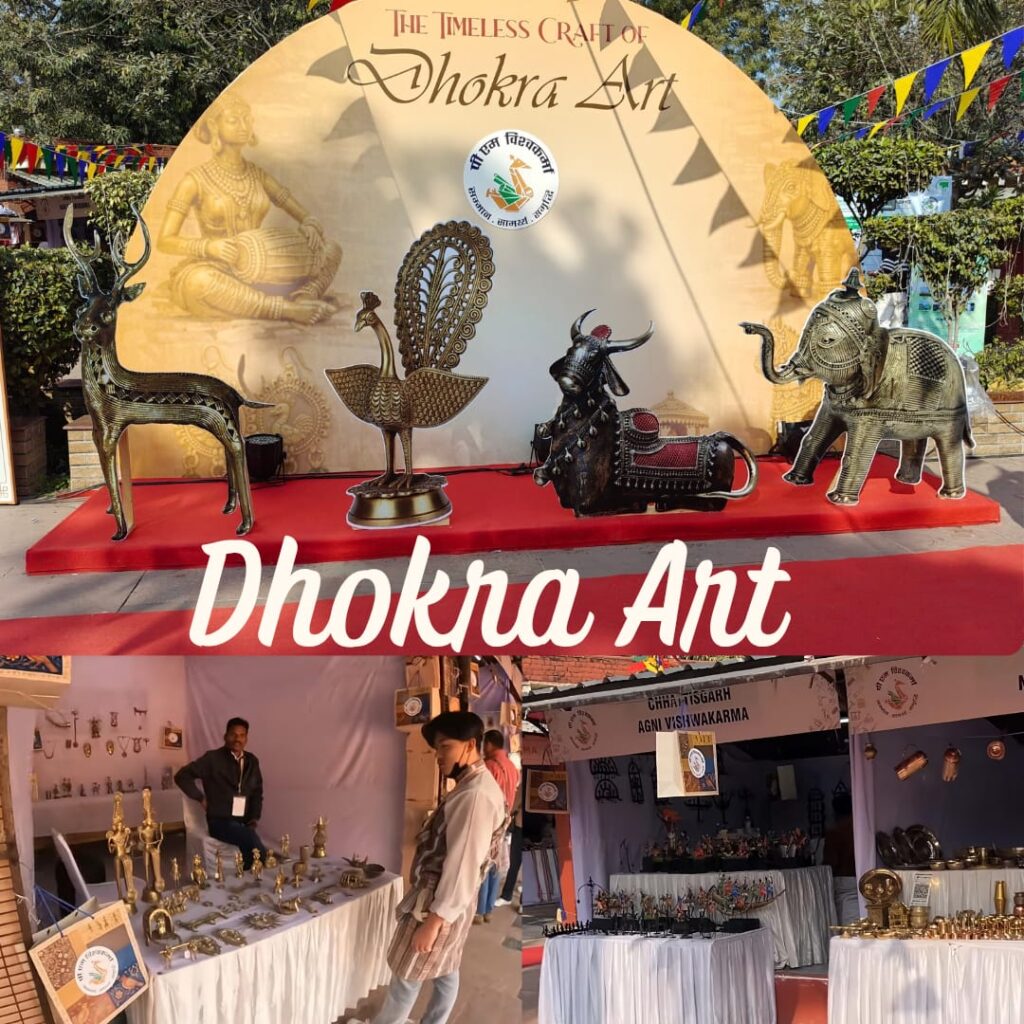
Dhokra Art from Chhattisgarh is protected by a GI tag, which helps preserve and provide information about this diminishing art. It is valued not for polish but for its raw, tactile surface, each piece bearing the direct imprint of the artisan’s hands and the rhythms of tribal traditions and culture, nature worship, and ancestral memory. The art calls for patience and hard work.
Bamboo And Wool Marvels
Artisans from across the country showcased a wide range of traditional crafts, skills, live demonstrations, and cultural experiences that reflected the spirit of “Vishwakarma Ka Abhiyaan, Viksit Bharat Ka Nirman” (the event’s theme).
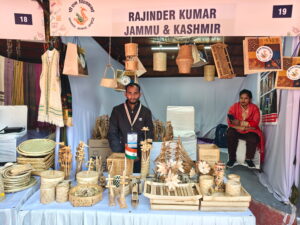
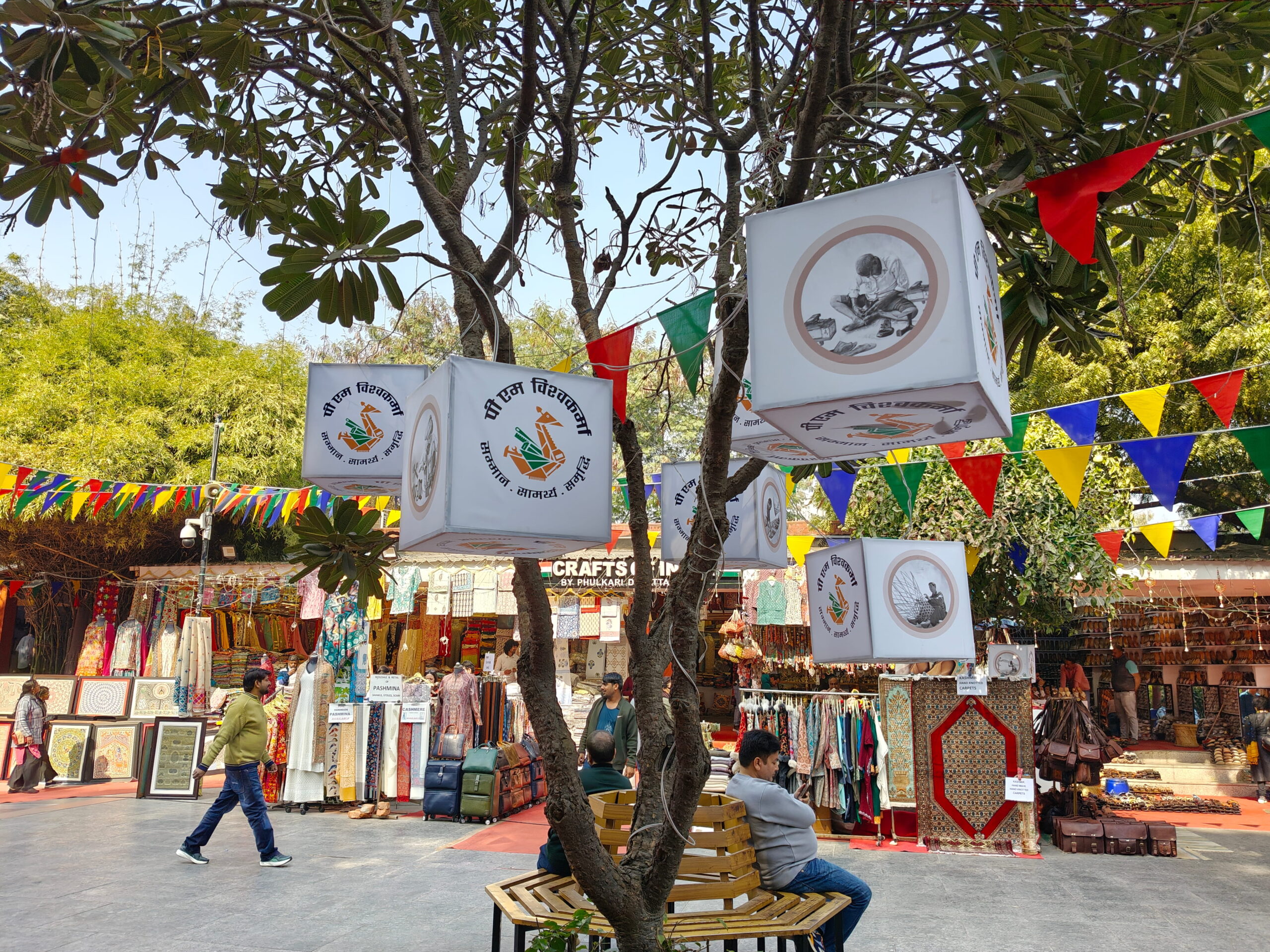
Artisans presented everyday crafts into stories of resilience and pride. Artisan Rajinder Kumar, from Jammu & Kashmir, showcased various bamboo-made products, including baskets, trays, flowerpots, and toys. He said that the platform has helped him turn his hard work into global recognition and eager buyers.
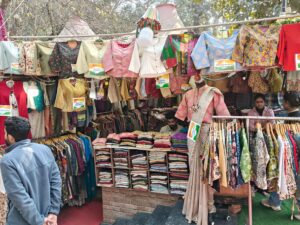
Another artisan, Suraj from Delhi, drew crowds with silk and khadi creations. The reversible blouses and crop tops became the highlight, blending tradition with modern utility. He told The Voices that the PM Vishwakarma event provides local artisans like him a platform to showcase art and skills. Many national and international visitors visited his stall.
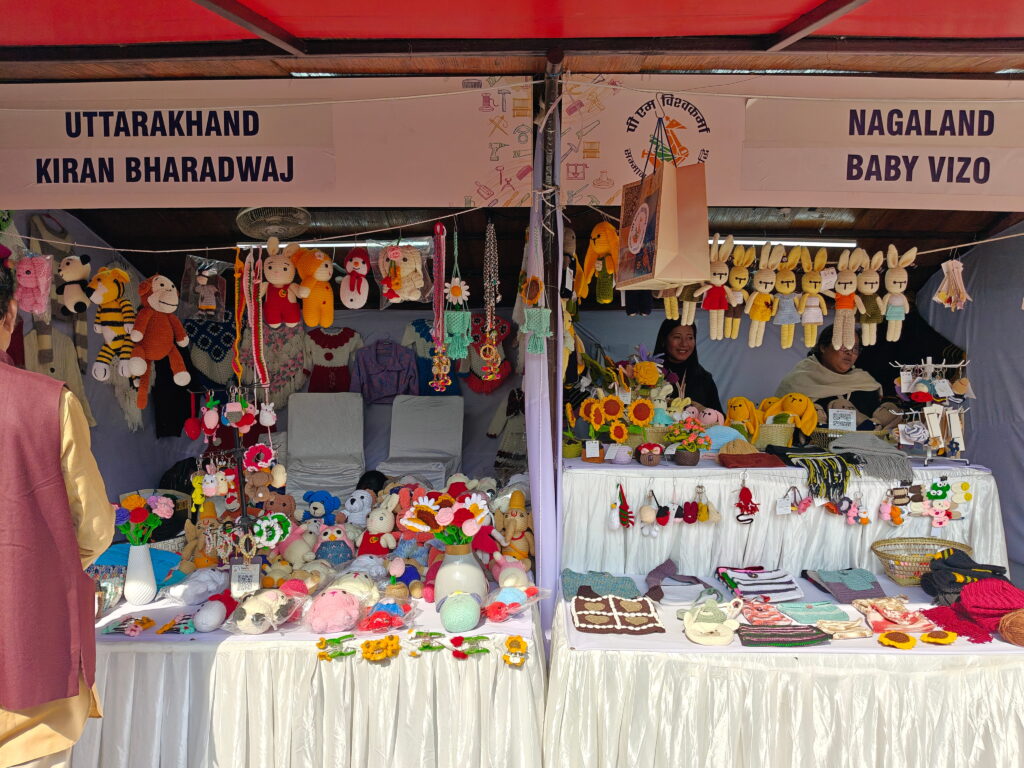
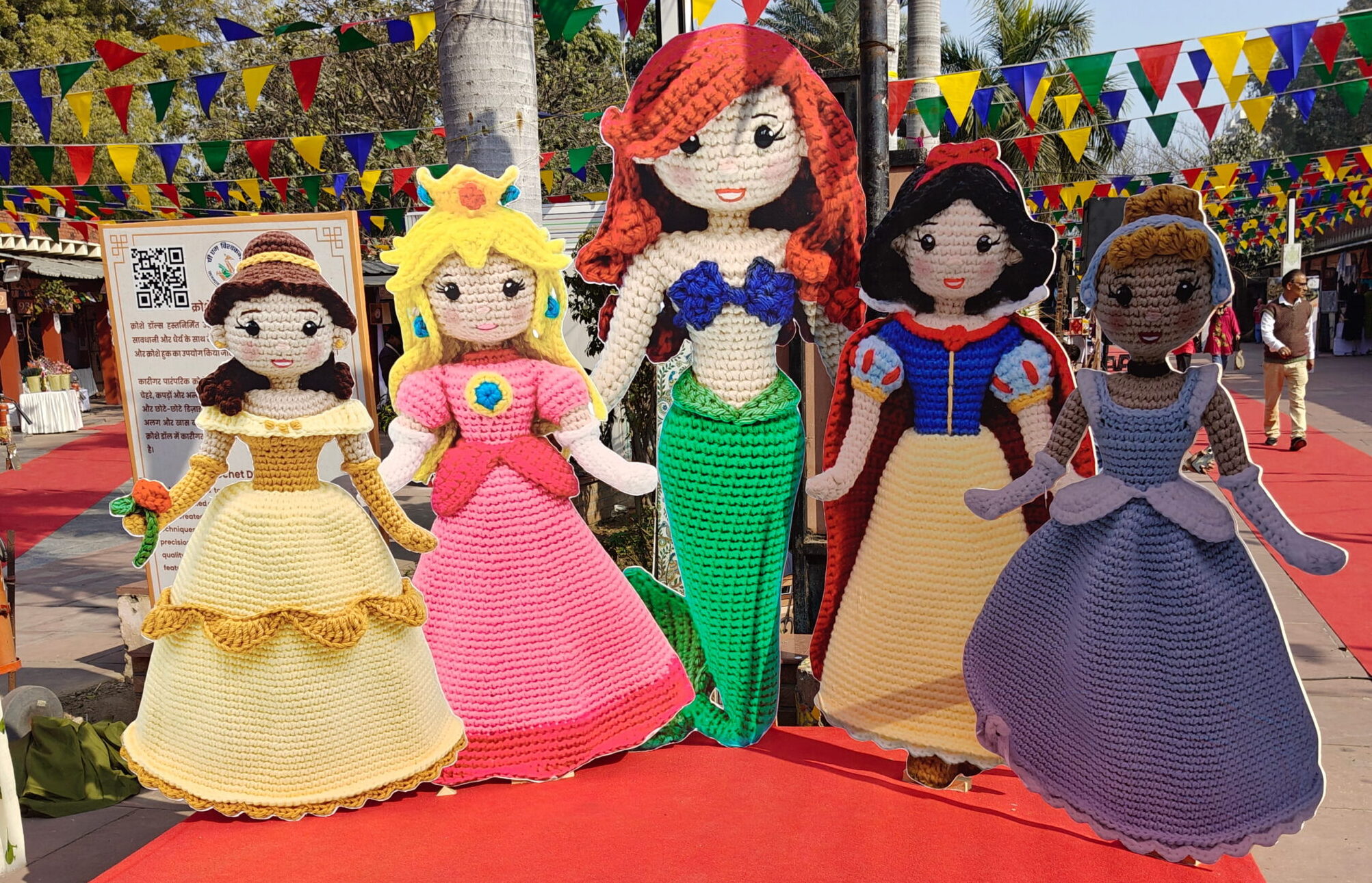
Similarly, shopkeepers Kiran Bharadwaj from Uttarakhand and Baby Vizo from Nagaland displayed crochet sheep-wool-made dolls, flowers, bags, and keychains. An instant hit with the children, the dolls’ selfie centre kept visitors occupied. Geeta Kumari from Kullu, who also had brought the crocheted dolls, said that the event has helped her bring her talent into the mainstream market. Joyes Chosphel from Ladakh had a live demonstration stall where he carved names and mantras into stone and pebbles. Victoria Syiem from Meghalaya had come with his bamboo-made products.
Live Bangles, Pottery Making
The live experience of making bangles and pottery, mainly from Rajasthan and Himachal Pradesh, added vibrance to the exhibition, attracting female visitors who could experience the live making of bangles. The craftsman sat behind the small furnace, heated some colourful lac (a type of material used in making bangles) until it softened, and, with smooth, practised movement, moulded it into the shape of colourful bangles. Visitors observed in awe as plain sticks transformed into colourful ornaments. On the other hand, the potter worked at the wheel and, with steady hands, moulded clay into beautiful shapes of pots, toys, etc. The artisans invited and encouraged visitors to try shaping their ideas and art skills. It remained a unique and once-in-a-lifetime experience for the visitors.
Talent Meets Technology
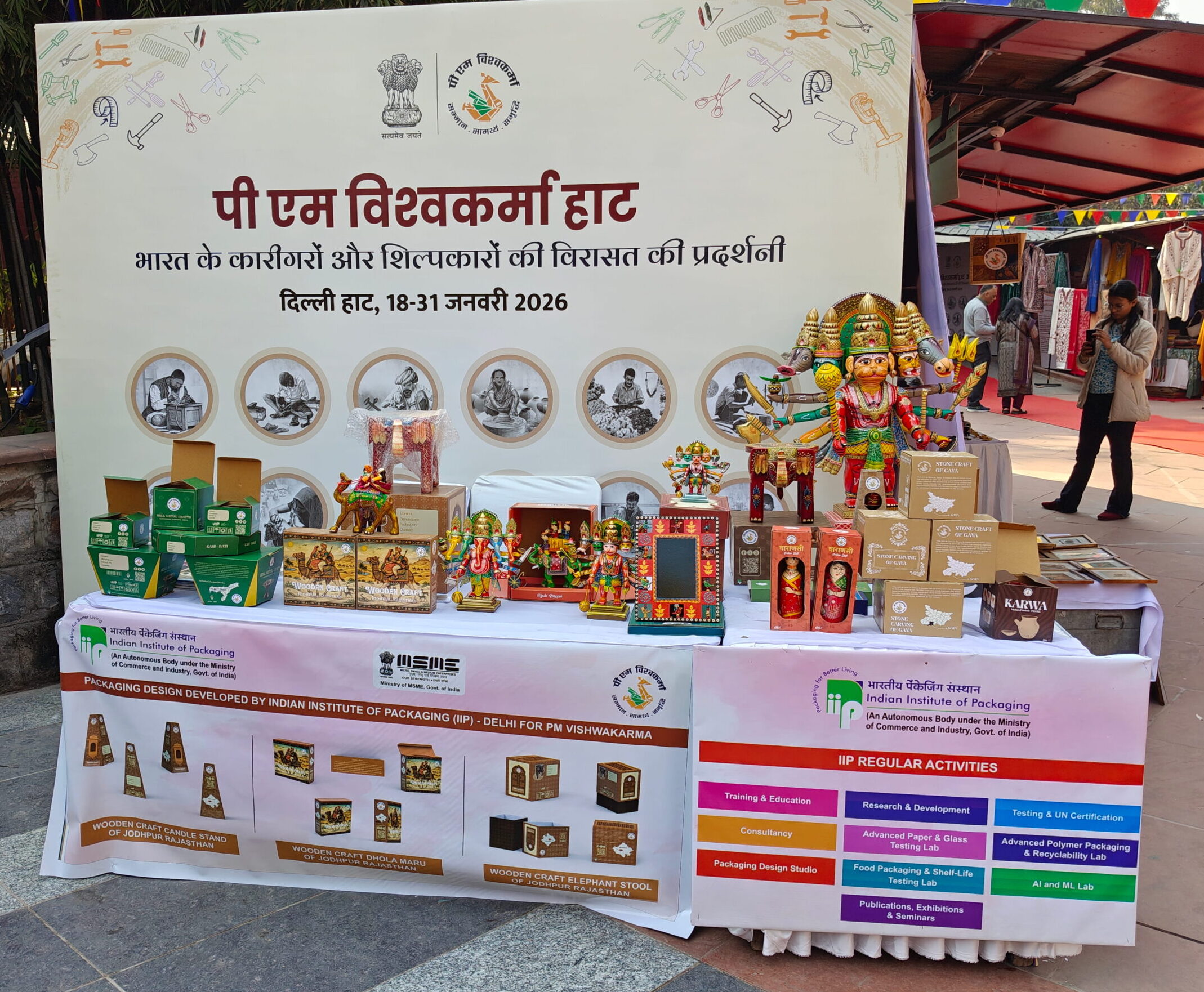
The Indian Institute of Packaging (IIP) – an autonomous body under the Ministry of Commerce & Industry, Government of India – provided tips to improve the packaging standards needed for the promotion of exports. IIP extended support in technical and packaging awareness to participating PM Vishwakarma artisans to improve product packaging, with emphasis on attractive, sustainable designs; visual appeal; and durability, including the use of eco-friendly materials. Apart from that, structured facilitation was also undertaken for e-commerce and digital market integration, including Amazon seller registration, professional product photography, product cataloguing, and GST registration support.
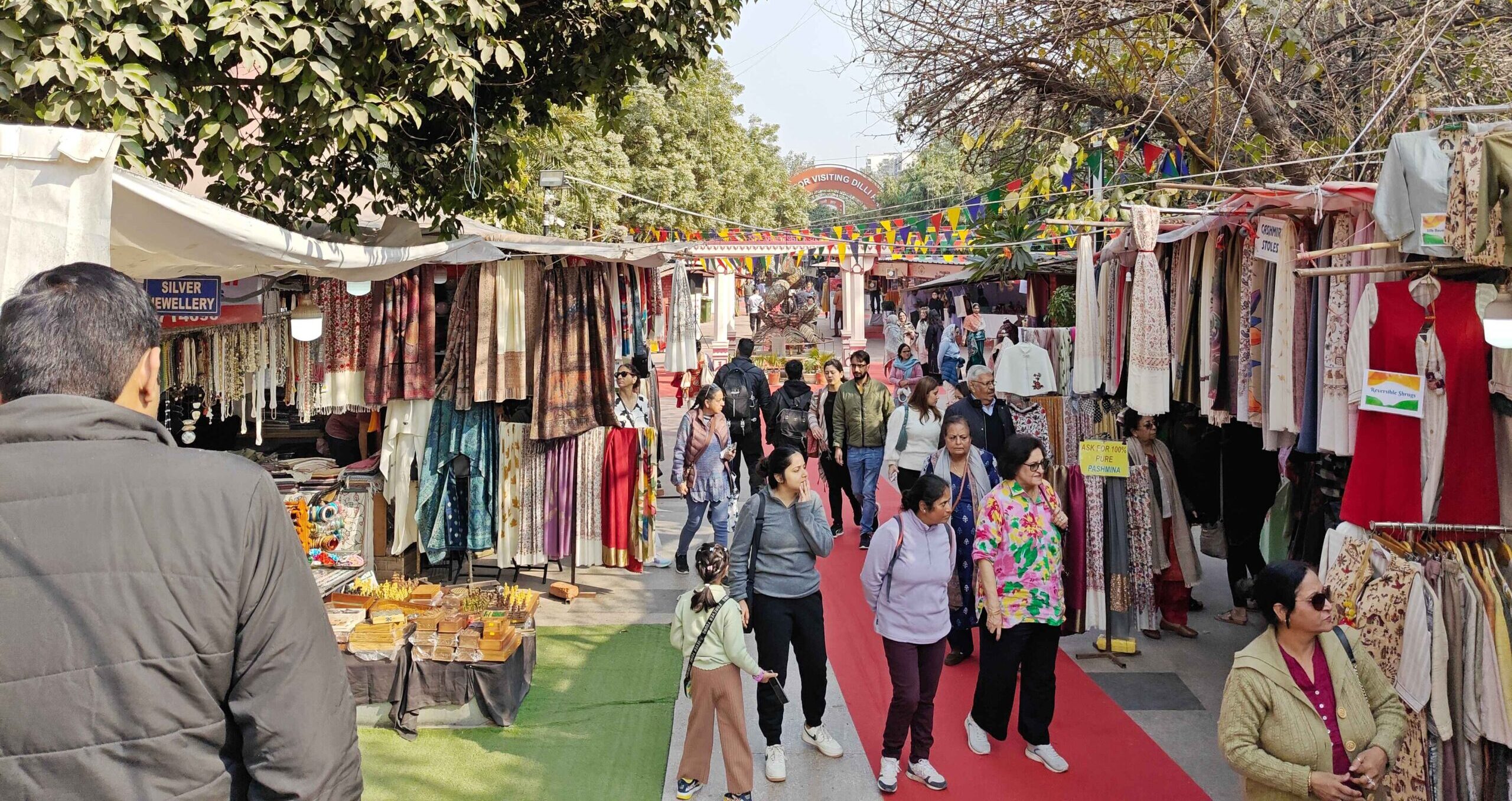
According to the Ministry of MSME reports, PM Vishwakarma Haat 2026 recorded a record attendance of more than 50,000 visitors. It generated sales revenue of approximately ₹2 crore within 15 days (i.e., 18th – 31st Jan 2026), including sales and purchases of artisanal products, utility items, traditional clothes, etc. The figures indicate a strong consumer response and effective market linkage.
The visitors carried home not just souvenirs but also memories of witnessing art in motion, memories that are on the verge of disappearing. The exhibition was more than a marketplace; it was a celebration of India’s artisans, where skill met recognition and tradition found new admirers. The event provided a platform for the local artisans to showcase their handmade crafts.
Copy Editor – Vikash Kumar Upadhyay