
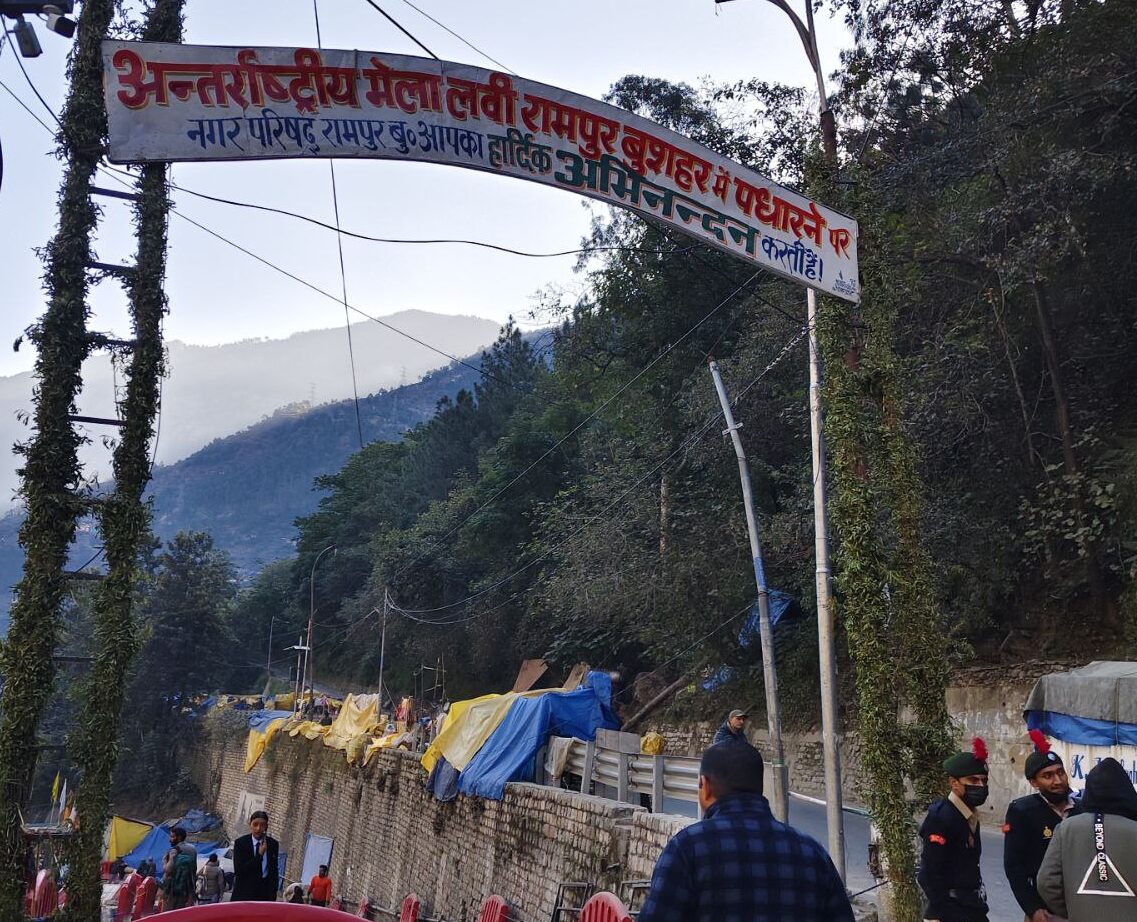
The melting pot of heritage, commerce, and culture, Himachal’s own international trade festival, held in the Rampura area of Shimla in November, helped artisans, self-help groups, and handicraft makers earn from digital imprints. The festival that commemorates the historic 17th-century trade treaty between the Bushahr state and Tibet has attracted talented artists who have successfully marketed their creations on digital platforms.
The Voices student reporter wields a camera and takes a trip to the hills of Rampur, amidst cold waves that cover the nitty-gritty of this international festival that attracts trade and commerce. Backed by the state government, HimIra (himira.co.in), a manufacturer of handicrafts, is utilising e-commerce to reach its consumers across the globe. The Lavi Fair served as the ideal launchpad for these manufacturers, who found new platforms for marketing their products physically at the international fair.
History Of the Lavi Mela, Bushahr and Tibet Pact
The annually held Lavi Fair dates back to a trade treaty between the erstwhile Bushahr state and Tibet. According to historians, its history dates back to the 17th century. The Kingdom of Bushahr state under Raja Kehri Singh and Tibet signed an agreement to exchange wool, pashmina, horses, and dry fruits for Indian goods like salt and jaggery. The Rampur area also serves as a halt point for shepherds from the upper hills (especially Kinnaur), who migrate to the plains at the onset of winter.
For trade purposes, the people from Bushahr and Tibet used to carry different types of herbs, dry fruits and woollen items. Traders from the plains used a ‘barter system’ with the locals. This tax-free commerce gradually became commercialised and transformed into an international trade fair, Sangeeta Negi from Reckong Peo told The Voices, who had come to display her hand-knit products.
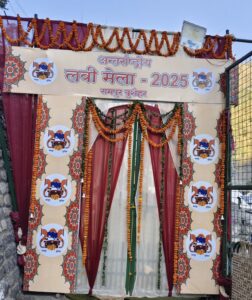
Himachal Pradesh Governor Shiv Pratap Shukla officially inaugurated the International Lavi Fair on November 11, while Chief Minister Sukhvinder Singh Sukhu graced the closing ceremony on November 15. The four-day event included traditional trade, cultural performances and a trade fair.
Chamurthi Horse – “Ship of the Cold Desert”
During the Lavi Mela, Chamurthi horse, often referred to as the “Ship of the Cold Desert”, remained the main attraction during the horse exhibition. The Chamurthi (four-hoofed) breed of horses is known for its better adaptability to the upper mountainous areas of Himachal, particularly in the snow-bound Spiti Valley. The animal trade remains unchanged from its ancient origins between Tibet and Kinnaur, with shows and livestock exhibitions continuing this legacy today.
This breed is one of the six recognised breeds of Indian horses, known for its stamina and surefootedness during high-altitude journeys, as it remains covered in snow for most parts of the year. It has been used by the Tibetans, Ladakhis, and people from the Spiti Valley for warfare and to carry their goods. It is widely used for various domestic and commercial purposes in the Kullu, Lahaul, Spiti, and Kinnaur areas of Himachal Pradesh and adjoining states.
In a way, the Lavi fair has acted as a conservation mechanism for these horses. Chamurthi horses were on the verge of extinction. To save the animal, Himachal’s animal husbandry department established a horse breeding centre in Lari, Spiti Valley, in 2002. This led to an increase in its population.
The Fair and its products
International Lavi Fair served as a platform for local traders, Kinnauri traders, small-scale entrepreneurs and self-help groups to market their handmade products. The fair aimed to empower rural people financially, provide them with a secure market, and now boosts their digital presence.
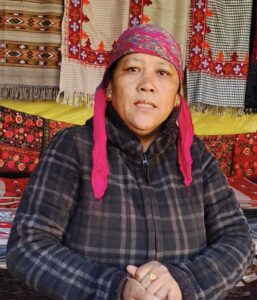
Groups from even remote villages, such as Dansa, Reckong Peo, Nankhari, Khaneri, and Nichar, were able to carve a niche for themselves with the help of the e-commerce platform himira.co.in. “This official e-commerce platform launched by the Himachal Pradesh government promotes and sells authentic, handcrafted products from people like us who run rural SHGs. It deals with over 350,000 women artisans across the state,” said Ritika Negi from Kinnaur.
Another SHG member, Neeta from Dansa, Nankhari district, Shimla, displayed handmade shawls, socks, sweaters and handmade food items like dalia, kasai and cereals with proper packaging and labels, along with handmade jute baskets and bags made of tea tree (cheel). Similarly, Babita from Devu Handloom Shawl in Kullu displayed a range of handmade shawls and Pashmina items, including scarves, mufflers, and stoles, made using khaadi (a tool used to make shawls) and Pattu, a type of long shawl-like clothing.
A shopkeeper, Sangeeta Negi, who runs her own small-scale industry in Reckong Peo, shared that she has 10-12 employees. Her handmade products, including shawls, pashmina wool shawls, mufflers, stoles, gloves, and sweaters, are made from sheep wool and simple wool. The exclusive handmade products are in demand with a distribution network in Chandigarh, Delhi, Gujarat and Himachal Pradesh.

The Bhagyashree cluster-level federation of artisans displayed handmade products made by a self-help group that covers 17 panchayats. Handmade products like shawls, pattu, sweaters, socks, mufflers, stoles and organic cereals and pulses. Bhagyashree CLF is receiving regular training from the state government’s block development office and sponsorships to showcase their products at Saras Mela and other fairs.
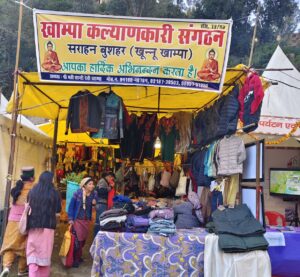
Shanti Devi Khampa from Sarahan, Bushahr, told The Voices that these skilled women then train their peers and receive remuneration from the BDO office. These financially independent rural women are sharing financial responsibilities of their family and claim to earn more than Rs 1 lakh annually. These women are part of the Himachal Pradesh State Rural Livelihood Mission (HPSRLM), which provides training to SHG members for managing their institutions, linking up with markets, and enhancing their credit absorption.
The himira.co.in and other platforms
These women entrepreneurs, from all age groups, are selling their handmade products on their own e-commerce platforms and on Amazon. During interaction, it was found that the commissions of third-party vendors, such as Amazon, are on the higher side. Therefore, SHGs prefer to sell their handmade products through self-owned e-commerce sites, fairs, and Saras Mela.
Dina Nath from Hem Kullu Shawls, who comes to the fair
Every year, handmade products like jute bags, shawls, woollen items, pickles, sira (cider), and organic pulses are sold here. The SHGs, namely Jai Shikari Kali Ma Gram Sangthan, Suryawanshi Swayam Sahayta Samooh (Block Nirmand), Khampa Kalyankaari Sangathan, Hema Kullu Shawls, Bodh Himalayan Weavers, and others, participated in the fair.
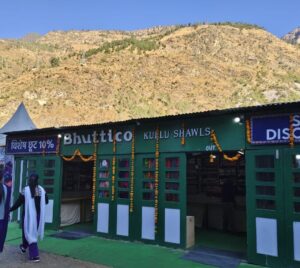
The Bhuttico Kullu Shawls also displayed their handwoven products. The company is officially known as the Bhutti Weavers Handloom and Handicraft Co-operative Society Limited, which was established on December 18, 1944, by a group of 12 progressive weavers. Since then, Bhuttico has become synonymous with high-quality Kullu shawls and other handwoven products made from Australian merino wool, pashmina, and Angora yarn. Today, Bhuttico is recognised both in India and internationally for its exquisite craftsmanship and dedication to preserving traditional weaving techniques
Copy Editor: Megha Mann